Skin Boosters & Glow
How to Get Korean Glass Skin Naturally at Home
How to get Korean glass skin naturally at home: an unstripped barrier, layered hydration, daily sunscreen, rare exfoliation, and DIY hacks a doctor skips.
 Dr. Sarang LimHead Doctor, Muse Clinic Myeongdong · 10 min readMedically reviewed by Sarang Lim, M.D., Head Doctor · Edited by: Sarang Lim, M.D.
In this article
- 01What does glass skin actually mean on real skin?
- 02A short routine for Korean glass skin at home
- 03Home hacks I'd skip
- 04Can you get glass skin at home with acne scars, enlarged pores or melasma?
- 05How long to give a home routine before you judge it
- 06Risks and side effects when you push for the glow
- 07When a clinic visit in Myeongdong is worth it
There are a few glass-skin tips I'd talk a friend out of, and most of them promise to get there faster. If you're working out how to get Korean glass skin naturally at home, the route that holds up is slower: a skin barrier you stop stripping, thin layers of hydration, sunscreen every morning and very little scrubbing. For many people that's enough for a smoother, more reflective surface. What it usually won't do is flatten an acne scar, tighten a stretched pore or clear melasma.
If that's your skin, and maybe you've already tried a shelf of serums, it helps to know where home care stops before you buy the next one.
What does glass skin actually mean on real skin?
Glass skin is skin that reflects light evenly. Three things decide that: enough water in the outer layer, a flat surface without bumps or dips, and even pigment. Home care mostly works on the first one.
This explains why two people can follow the same ten-step routine and get very different results. Someone whose main issue is dehydration may see a real change in a few weeks. Someone whose skin has rolling acne scars will see better-hydrated skin with the same scars, because light still catches on the edges of each dip.
Since "how to get Korean white skin" sits right next to this search, note that glass skin is about the surface, not about a lighter shade. A medium or deep skin tone can look just as glassy. Chasing a lighter color is where lemon juice and unlabeled lightening creams tend to show up, and I come back to those below.
A short routine for Korean glass skin at home
Five habits do most of the work, and drugstore versions of each are enough.
If you have to trim the list below, skin type decides what goes first. On oily skin, I'd drop the second hydration layer and the heavy cream before anything else, because a gel moisturizer plus sunscreen often covers it. On dry skin, exfoliation is the first thing I'd cut, sometimes for good. Sunscreen stays on either list.
If earlier experiments have left your skin red and stinging, I'd pause everything except cleanser, moisturizer and sunscreen; calming that comes before any clinic treatment is worth discussing.
- 01A low-foam cleanser. Once at night is usually enough. If your face feels tight after washing, the cleanser is probably too strong for you. Double cleansing, the oil-then-foam step many K-beauty routines start with, makes sense on evenings you wore sunscreen or makeup; on bare-skin days a single wash is enough.
- 02Hydration in thin layers. A toner or essence with humectants such as glycerin or hyaluronic acid, patted onto slightly damp skin, then a second thin layer if you're dry. Humectants pull water into the outer layer, which is the part of glass skin you can actually change at home.
- 03A moisturizer that seals it in. Ceramides and other barrier lipids help hold that water. Oily skin can use a lighter gel; dry skin usually needs a cream.
- 04Sunscreen every morning. Broad-spectrum, reapplied when you're outdoors. UV exposure is one of the main drivers of uneven tone and rough texture, and it undoes the rest of the routine.
- 05Exfoliation, rarely. The American Academy of Dermatology advises choosing an exfoliation method by skin type, being gentle, and that dry, sensitive or acne-prone skin may need a milder method and less frequent use (AAD). Once or twice a week is plenty for many people; some need none.
Drinking enough water matters if you're dehydrated overall, but it doesn't put water into the outer layer the way a humectant on the skin does. Evidence tying specific foods to glass skin is limited, so I wouldn't build a routine around a diet. Add sleep and keeping your hands off your face. Picking at spots leaves marks that last far longer than the spot did.
Home hacks I'd skip
Lemon juice, active stacking, home needling, collagen creams and unlabeled lightening creams come up often in videos about the "secret of Korean glass skin". A few of them can set your skin back by weeks.
The sting a few minutes into a lemon or vinegar mask, the one people read as "it's working", is irritation, and in medium and deeper skin tones irritation can leave darker patches behind.
Lemon and lime carry one more problem. Their juice contains furocoumarins that react with sunlight, and a 2017 case report in Clinical Practice and Cases in Emergency Medicine notes that lasting darkening can follow this reaction (Smith et al., 2017).
An acid toner, then a retinol, then a vitamin C serum, then an exfoliating mask, every night, tends to strip the barrier. The AAD notes that retinoid creams, retinol and benzoyl peroxide can make skin more sensitive, and that exfoliating on top of them may worsen dryness or even cause breakouts (AAD).
Home needling devices pressed hard to "get collagen going" break the skin open in a bathroom, not a sterile room, and the depth is guesswork. Infection and marks are what can go wrong; extra glow isn't assured.
A collagen cream won't add collagen either. Skin is a barrier by design. A 2000 paper in Experimental Dermatology describes the "500 Dalton rule": molecules above roughly that size pass through intact skin poorly (Bos & Meinardi, 2000). Collagen is far larger. The cream can still work as a moisturizer, and that's the job it's doing.
With lightening creams sold without a full ingredient list, the problem is simpler: if the seller can't show you exactly what's in the jar, neither of us can judge whether it's safe to put on your face every day.
If I could change one habit in people chasing glass skin, it would be the urge to add. Red, stinging skin rarely needs a new product; it usually needs three weeks of fewer products. Skin that isn't stinging reflects light better than irritated skin, and that's the part of glass skin you control.
Can you get glass skin at home with acne scars, enlarged pores or melasma?
Usually not with products alone. Hydration makes these skin types look better, but acne scars, stretched pores and melasma sit deeper than a cream reaches.
Acne scars. A depressed scar is a dip where collagen was lost or where scar tissue tethers the surface down. Light catches the edge of that dip whatever is on top.
Enlarged pores. Round pores on oily skin can look smaller when sebum and congestion are managed at home. Pores that look elongated or teardrop-shaped are often linked to loss of elasticity around them, which home care rarely reverses.
Melasma and pigment. Melasma tends to flare with sun, heat and hormones, and scrubbing can make it worse. At home, strict sun protection and skipping scrubs are the main tools. Pigment patterns differ (blotchy patches on both cheeks are not the same as scattered spots), and that difference matters before anyone picks a laser or a peeling treatment.
If one of these describes your skin, keep the five-habit routine anyway; it just won't reach the deeper problem.
How long to give a home routine before you judge it
A couple of months of steady use, changing one thing at a time.
Three rules for the trial:
- Introduce one new product at a time, and patch-test it on the jaw or behind the ear for a few days first.
- Keep the rest of the routine fixed while you test, otherwise you can't tell what helped or what irritated.
- Write down a short note each week: tightness, shine, new spots, stinging.
If your skin is better hydrated and calmer but the texture is unchanged after a fair trial, that result tells you the remaining issue sits deeper than a cream works.
Risks and side effects when you push for the glow
The common problems are irritation, a damaged barrier and new breakouts. Most settle once you stop the culprit, but darker marks from irritation can take months to fade.
Stinging with products that never used to sting is often the first sign of an over-stripped barrier. So is a tight, flaky surface with a shiny look: that shine is not glass skin, but often a thinned, irritated outer layer.
Three more signs to watch:
- Small bumps or new breakouts, which can come from heavy layering, from an ingredient that doesn't suit you, or from over-exfoliating.
- Darker patches after redness, more likely in medium and deeper skin tones and slow to fade.
- Burning, swelling or hives. Stop everything new and see a doctor, especially if your eyes or lips are involved.
Skin responds differently from person to person, so a routine that works for a friend may irritate you. If you have eczema, rosacea, or are using prescription acne treatment, check with your own doctor before adding acids or retinol. The clinic side of this question, meaning what in-office treatments can cause, is covered in the side effects of Korean glass skin treatments.
When a clinic visit in Myeongdong is worth it
A visit is worth it when a fair home trial has handled hydration but these deeper issues haven't moved. Which option fits is decided at the consultation, after looking at your skin in person.
At Muse Clinic Myeongdong, the treatments that come up for glass-skin goals include two options on our treatment menu:
- Olidia Skin 4cc, a PLLA injection that stimulates the skin's own collagen production, aimed at wrinkles, texture and tone; results and side effects vary by person and are discussed at the consultation.
- Skin Regeneration Care, listed under Skin Care on the menu, which focuses on calming irritated skin.
If you'd like to see how clinic options fit together over a visit, the in-clinic glass skin plan walks through it.
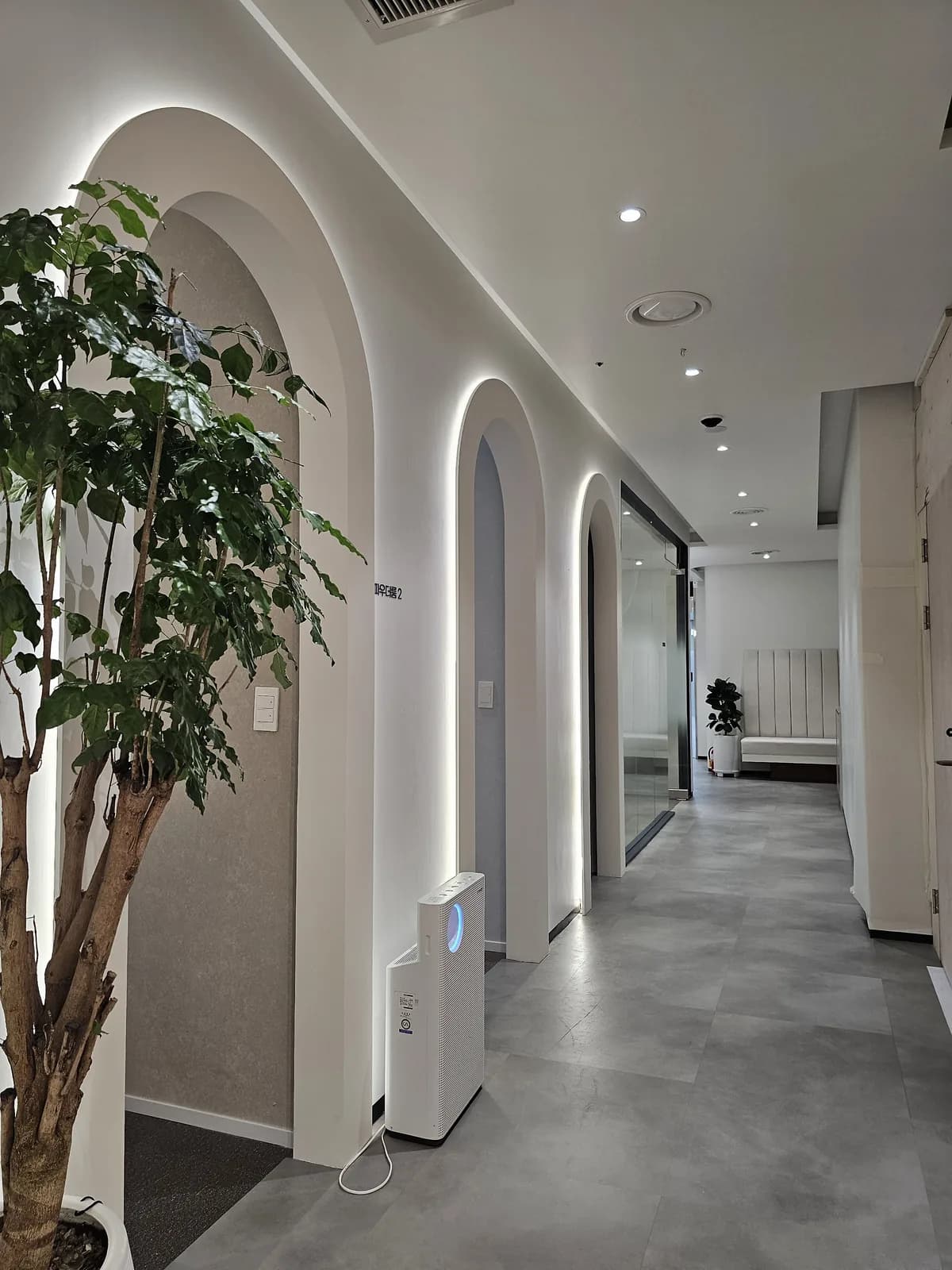
Practical details for a trip: Muse Clinic Myeongdong is on the 3rd floor of Korea Daeyungak Tower, a 1-minute walk from Myeongdong Station Exit 5 (Line 4). English, Japanese and Chinese interpreters are in the clinic, and someone stays with you from consultation through treatment. Hours are Monday to Friday 10:00 AM to 8:00 PM and Saturday and Sunday 9:00 AM to 3:00 PM, which helps if you only have a weekend in Seoul.
The useful first question is whether the skin has a water problem or a shape problem. Dehydration tends to show as fine crisscross lines that ease once a moisturizer goes on; a texture problem casts small shadows under side light no matter what is on top. The second: does a shape problem need more than daily care? That is where a clinic treatment can add something, though the daily habits still decide how long the surface holds. I'm a member of the Korean Academy of Aesthetic Plastic & Laser Medicine, and my training is listed on my profile page.
If you're unsure which side of the line your skin is on, take one photo of your bare face in daylight by a window, no makeup or filter, and send it on WhatsApp along with a photo of the products you use now. If you're planning a trip, add your travel dates. The final call on what suits you is made at an in-person exam.
Questions people ask
Before you message us
How far can a home routine go for glass skin?
Partly. At home you can improve hydration, stop stripping the barrier and protect against sun-driven unevenness, which is a large share of the glassy look for many people. Deeper texture and pigment problems usually sit deeper than products reach, so the result depends on what your skin's main issue is.
What is the secret of Korean glass skin?
There isn't one product behind it. The look comes from well-hydrated outer skin, a smooth surface and even pigment. In a home routine, that means a low-foam cleanser, thin layers of humectant hydration, a sealing moisturizer, daily sunscreen and very little exfoliation. Consistency over a couple of months matters more than any single serum.
How often should I exfoliate for glass skin?
Less often than most videos suggest. Once or twice a week is plenty for many people, and dry or sensitive skin may need a milder method or none at all. If you use retinol, retinoid creams or benzoyl peroxide, adding exfoliation can increase dryness and irritation. Stop if skin stings, reddens or flakes.
Is Korean glass skin the same as having lighter or whiter skin?
No. Glass skin describes how evenly skin reflects light, not its color, so any skin tone can look glassy. Chasing a lighter shade is where many risky home products appear, including creams sold without a full ingredient list. Protecting skin from sun and irritation does more for an even, bright look.
Why does my skin look shiny but not glassy after my routine?
A tight, shiny look with flaking or stinging often means an irritated, over-stripped barrier rather than healthy hydration. Heavy layering of actives or frequent exfoliation are common causes. Cutting back to a low-foam cleanser, moisturizer and sunscreen for a few weeks usually shows you what your skin looks like when it isn't irritated.
Results and maintenance period vary by individual. Every procedure carries the possibility of side effects, which are explained before you agree to treatment. Prices exclude 10% VAT and event prices may change. This article is general information from the clinic and is not a diagnosis; suitability is decided at the consultation.
Written by
Dr. Sarang Lim
Head Doctor · Muse Clinic Myeongdong
- Education & training
- Graduated, Inje University College of Medicine · Residency training, Paik Medical Center (Inje University) · Sungkyunkwan University Graduate School, Master's degree · Indiana University Kelley School of Business
- Advisory & certification
- Cynosure — Certified laser center · Juvéderm — Advisory doctor · QT Fill — Advisory doctor · Olidia — Advisory doctor · Galderma Sculptra — Advisory doctor · Merz — Advisory doctor · Jeisys — Advisory doctor · NOVA Thread — Advisory doctor
- Academic societies (full member)
- Korean Academy of Aesthetic Plastic & Laser Medicine · Korean Society of Aesthetic Surgery · Korean Society of Obesity Research Medicine · Korean Society of Obesity & Aesthetic Medicine · Korean Society of Anti-Aging Medicine