Skin Boosters & Glow
Korean Skin Booster Injection Risks by Day
Korean skin booster injection risks in the order they show up on a Seoul trip: first-hour bumps, bruising, late lumps, rare emergencies and how to plan.
 Dr. Sarang LimHead Doctor, Muse Clinic Myeongdong · 10 min readMedically reviewed by Sarang Lim, M.D., Head Doctor · Edited by: Sarang Lim, M.D.
In this article
- 01What goes into a Korean skin booster injection?
- 02What a booster does, and when results show
- 03The first hour after injection
- 04What can show up in the first three days of your trip?
- 05What can appear weeks after you've flown home?
- 06Rare but serious risks: a blocked blood vessel
- 07Who should postpone a skin booster injection?
- 08Fitting a skin booster into a short Seoul trip
Before you book a Korean skin booster injection for a five-day Seoul trip, check four things. Which product family goes into your skin. How many days of visible bumps your itinerary can absorb. Where you will be if a small lump shows up six weeks later. And whether anything about your skin right now means waiting until next trip.
Most reactions after a skin booster injection are small and short-lived, such as pinpoint bumps, redness, bruising and tenderness. The U.S. FDA's guidance is written for dermal fillers, not boosters specifically, but its pattern is a useful guide here: most side effects of injected dermal products appear shortly after injection and many resolve in a few days to weeks.
A smaller group shows up later, and a rare few are emergencies. I'm Sarang Lim, Head Doctor at Muse Clinic Myeongdong, and below I go through those risks in the order they would appear on a trip.
- Product family: hydrating types and collagen-stimulating types behave differently over time.
- Bump days: the first day usually shows a grid of small raised dots; bruises can last longer.
- After you fly home: a delayed lump needs a plan and a local doctor, not panic.
- Reasons to postpone: an active breakout, a cold sore, pregnancy, or a fever this week.
What goes into a Korean skin booster injection?
Most skin boosters fall into two families: products that hold water in the upper layers of the skin, usually hyaluronic acid, and products that prompt the skin to build its own collagen over weeks, such as poly-L-lactic acid (PLLA). The family decides your risk timeline more than the brand name does.
On our menu, Olidia Skin 4cc is the PLLA-based option, meant to stimulate the skin's natural collagen production to improve wrinkles, texture and tone. The same skin injection menu also lists Skin vive.
The technique is what makes boosters feel different from volume filler. Instead of one deposit that changes a contour, the product goes in as many tiny, shallow deposits across the cheeks or forehead. More needle points means more chances for pinprick bleeding and small bumps, and much less change in face shape.
The "glass skin" look people search for is mostly about hydration and smoother texture, which is why boosters sit so close to that search. Our menu has a Lilied M glass skin injection in the same skin injection group. For a wider look at what each booster does, see our overview of skin boosters in Korea.
What a booster does, and when results show
A skin booster aims at the quality of the skin surface (hydration, fine lines, texture and tone) rather than at face shape. Hydrating products tend to show their effect sooner, once the first bumps settle. Collagen-stimulating products such as PLLA work more slowly, because the skin builds its own collagen over the following weeks.
That slower timeline is why collagen-stimulating boosters are often planned as a series of sessions spaced weeks apart rather than as a single visit. How many sessions make sense, and how visible the change is, varies with your skin, your age and the product, and the doctor sets that plan at the 1:1 consultation. For a traveler, it also means the result of a PLLA booster usually arrives after you are home, not during the trip.
One caution that applies anywhere in the world: the FDA advises against buying injectable products online, because they could be counterfeit, and against self-injection. A booster bought at a market stall or from a social media seller skips every safety step described on this page.
The first hour after injection
Expect a grid of small raised dots where each droplet sits, a few pinpoints of blood, and some redness and stinging. With hydrating boosters these dots often flatten within a day, though how your skin reacts varies from person to person.
Many people are surprised by how visible the dots are in the mirror straight afterwards. They are the product sitting just under the surface, not a sign that something went wrong. Pressing or massaging them on your own is not a good idea unless the doctor tells you to; some products are massaged as part of the treatment and others are not.
The practical question for a traveler is makeup. Many doctors suggest keeping makeup off the injection points for the rest of the day, because each point is a small open entry into the skin. If you have dinner plans that evening, a hat and sunscreen are easier than full coverage.
What can show up in the first three days of your trip?
Bruising, swelling, tenderness and itching are the reactions most likely to affect photos and plans. Most settle within days, and some bruises take a week or two to fade.
| Reaction | How it usually behaves | What changes your plan |
|---|---|---|
| Raised dots | Visible right away, often flatten within a day | Book on a day without photos that evening |
| Bruising | Can appear hours later, fades over days | More likely if you take blood-thinning medicine or supplements |
| Swelling | Mild puffiness for one to three days | Worse after alcohol, saunas and salty late-night meals |
| Itching or rash | Usually mild and short | Tell the clinic if it spreads beyond the treated area |
| Pain that keeps rising | Not the usual pattern | Go back to the clinic the same day |
The last row matters most. Discomfort from a booster normally peaks in the first hours and then fades. Pain that increases, skin that turns hot with swelling, or pus at an injection point are signs of infection and need a doctor to look at them the same day.
For a short trip, this is why timing matters. If you book the injection on your first or second day, any bruise has time to settle and you still have days left to walk back in if something looks wrong. Booking it the afternoon before an early flight leaves no room for either.
What can appear weeks after you've flown home?
Small firm lumps under the skin, called nodules, can appear weeks or months later, especially with collagen-stimulating products such as PLLA. They are uncommon, but they are the main reason to know the name of the product you received before you leave Seoul.
For dermal fillers, the FDA lists raised bumps in or under the skin (nodules or granulomas) as a less common risk that may need treatment, and notes that some side effects can appear weeks, months or even years after injection. A 2020 case report in the Annals of Dermatology described facial nodules from PLLA appearing about 18 months after injection; earlier reported cases the authors tabulated ranged from 7 days to 16 months.
The same FDA page mentions a detail travelers rarely hear: inflammation near an injection site can follow illnesses, infections, vaccinations or dental work. A cold caught on the flight home or a dental cleaning the next week can occasionally set off swelling at old injection points.
What to do before you leave:
- Write down the product name, the treated areas and the date.
- Take a clear photo of your face in daylight each morning for the first week, so you have a baseline.
- If a lump appears at home, see a local dermatologist and show them that note and your photos.
The late lump is the risk I most want travelers to hear about before they book, because it can surface when you are thousands of kilometers away and the clinic is no longer one subway stop from your hotel. It is not common. But a person who walks into their local doctor's office with the product name, the treated areas and a dated photo gives that doctor something concrete to work from.
Rare but serious risks: a blocked blood vessel
The most concerning risk with any facial injection is product entering a blood vessel. In its filler guidance, the FDA warns this can cause tissue death, vision abnormalities including blindness, and stroke.
The FDA's warning signs are specific: unusual pain, changes in vision, skin that turns white, gray or blue, or any symptoms of stroke. These events are rare, shallow placement does not make the risk zero, and any of these signs means immediate medical care.
In the treatment room in Myeongdong, this is where language matters. If something feels wrong while the needle is in, you need to say it in the moment and be understood. English, Japanese and Chinese interpreters are on site, and someone stays with you from consultation through treatment, so you can describe a sudden sharp pain or a blur in your vision in your own words.
Severe allergic reactions are another rare emergency; mention any past reaction to an injection or anesthetic cream before you start.

Who should postpone a skin booster injection?
Postpone if you have an active breakout, a cold sore or any infection in the area you want treated, a fever or illness this week, or if you are pregnant or breastfeeding. A dental procedure or vaccination planned for the same few days is another reason to space things out.
Other situations call for a conversation rather than a flat no:
- Blood-thinning medicine or supplements. These raise the chance of bruising. Never stop a prescribed medicine for a cosmetic treatment without asking the doctor who prescribed it.
- A history of cold sores. Needle points around the mouth can trigger a flare, so the doctor may adjust the plan.
- Previous filler or booster lumps. Bring the product name if you know it.
- Autoimmune conditions. Immune activity can affect how the skin reacts to injected material, and the doctor weighs this in person.
- A big event in the next three days. A wedding or a photo shoot is a reason to move the injection, not to skip it forever.
Telling someone who planned a trip around a treatment that this is not the week can feel awkward for both of us. I would still rather say it on day one than see an infected needle point on day three, when there is no time left to manage it before the flight.
Fitting a skin booster into a short Seoul trip
Book it early in the trip, keep the evening open, and leave at least one weekday or weekend slot open for a return visit before you fly. Clinic hours are Mon–Fri 10:00 AM to 8:00 PM and Sat–Sun 9:00 AM to 3:00 PM, which is enough room for a recheck on most itineraries.
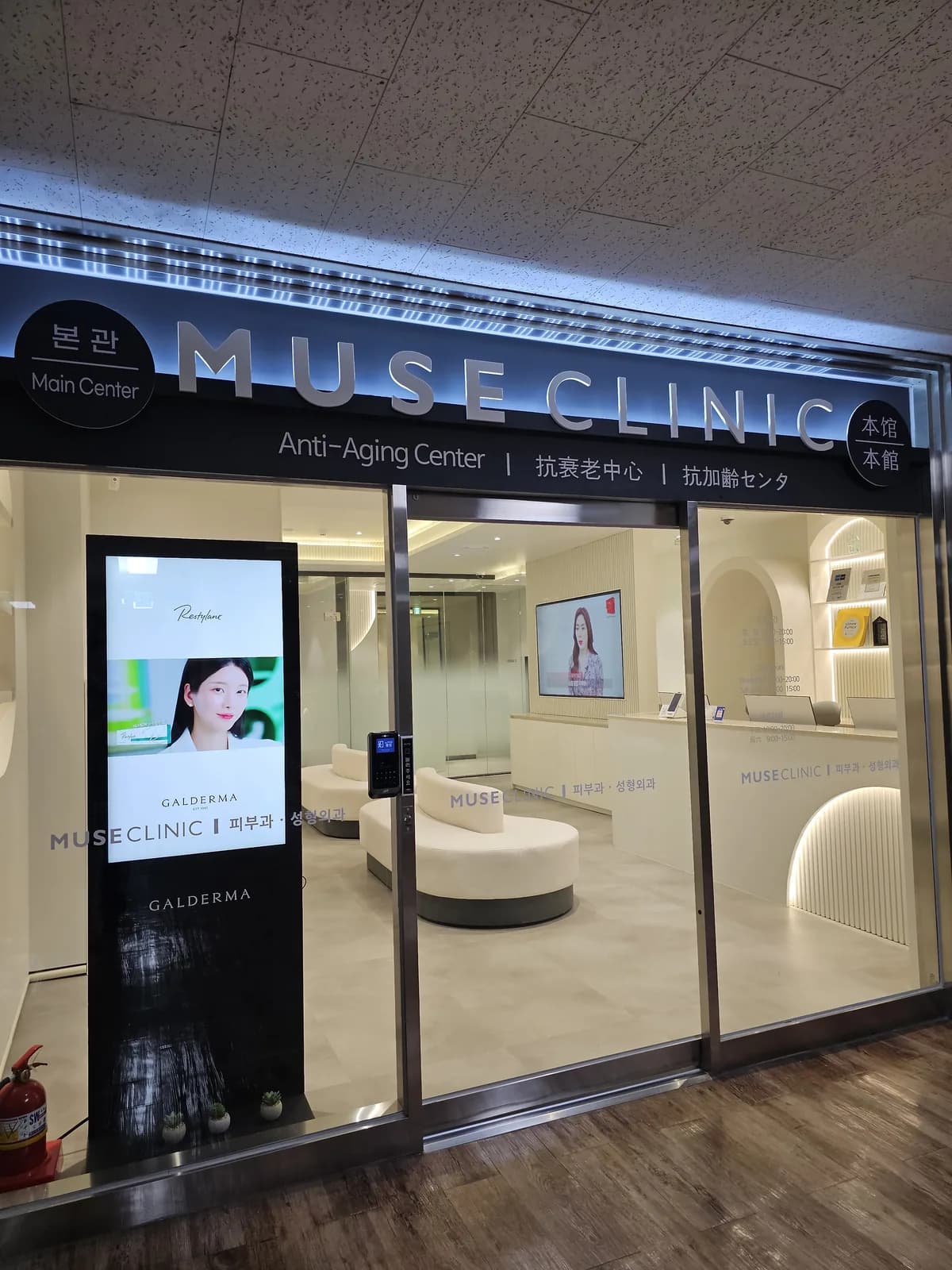
The clinic is a 1-minute walk from Myeongdong Station Exit 5 on Line 4, on the 3rd floor of Korea Daeyungak Tower, so a quick return visit fits between other plans. Directions are on the Muse Clinic Myeongdong home page.
If you are combining boosters with other treatments, our guide to what visitors book for skin treatment in Seoul covers how people usually space them, and the glutathione injection visit plan shows another way to plan around a short stay. The full list of options is on the treatments page, and the doctor's education and society memberships are on the doctor profile.
Planning a trip now? Send your travel dates on WhatsApp, plus one line from the postpone list: a breakout, cold sores, a medicine, or an old lump. That helps plan the consultation around your dates. At the 1:1 consultation in Myeongdong, the doctor decides with you whether a booster fits this trip or the next one.
Questions people ask
Before you message us
How long do the bumps from a skin booster injection last?
The small raised dots that appear right after a skin booster injection usually flatten within about a day, especially with hydrating products. Bruises can take longer and sometimes need a week or two to fade. How quickly your skin settles varies from person to person, so plan the injection early in a short trip rather than the day before a flight.
Can I fly home the day after a Korean skin booster injection?
Many people travel soon after, but flying the next day leaves no time to walk back into the clinic if a bruise grows, pain increases or a needle point looks infected. Booking the injection on the first or second day of your stay gives you room for a recheck in Seoul before you leave.
Is a skin booster the same thing as filler?
Both are injected, but the goal and technique differ. Filler is placed in larger deposits to change volume or contour. A skin booster is spread as many tiny, shallow deposits to improve hydration, texture or fine lines, with little change to face shape. Some products, such as PLLA, work by stimulating collagen gradually over weeks.
What should I do if a lump appears after I get home?
See a local dermatologist and bring a note with the product name, treated areas and treatment date. Delayed nodules are uncommon but can appear weeks or months later, and many are treatable. Daily photos from the first week after treatment also help your local doctor compare what changed.
Should I mention my supplements before a skin booster injection?
Yes. Blood-thinning medicines and some supplements raise the chance of bruising, which matters when you have photos or meetings planned during a trip. Tell the doctor everything you take, including over-the-counter products. Do not stop a prescribed medicine on your own for a cosmetic treatment; ask the doctor who prescribed it first.
Results and maintenance period vary by individual. Every procedure carries the possibility of side effects, which are explained before you agree to treatment. Prices exclude 10% VAT and event prices may change. This article is general information from the clinic and is not a diagnosis; suitability is decided at the consultation.
Written by
Dr. Sarang Lim
Head Doctor · Muse Clinic Myeongdong
- Education & training
- Graduated, Inje University College of Medicine · Residency training, Paik Medical Center (Inje University) · Sungkyunkwan University Graduate School, Master's degree · Indiana University Kelley School of Business
- Advisory & certification
- Cynosure — Certified laser center · Juvéderm — Advisory doctor · QT Fill — Advisory doctor · Olidia — Advisory doctor · Galderma Sculptra — Advisory doctor · Merz — Advisory doctor · Jeisys — Advisory doctor · NOVA Thread — Advisory doctor
- Academic societies (full member)
- Korean Academy of Aesthetic Plastic & Laser Medicine · Korean Society of Aesthetic Surgery · Korean Society of Obesity Research Medicine · Korean Society of Obesity & Aesthetic Medicine · Korean Society of Anti-Aging Medicine