Fillers & Volume
Korean PLLA Filler: How It Works, Who It Suits
Korean PLLA filler builds collagen over weeks, so it suits broad hollows and patient planners. See who it fits, the risks, and what to send on WhatsApp.
 Dr. Sarang LimHead Doctor, Muse Clinic Myeongdong · 10 min readMedically reviewed by Sarang Lim, M.D., Head Doctor · Edited by: Sarang Lim, M.D.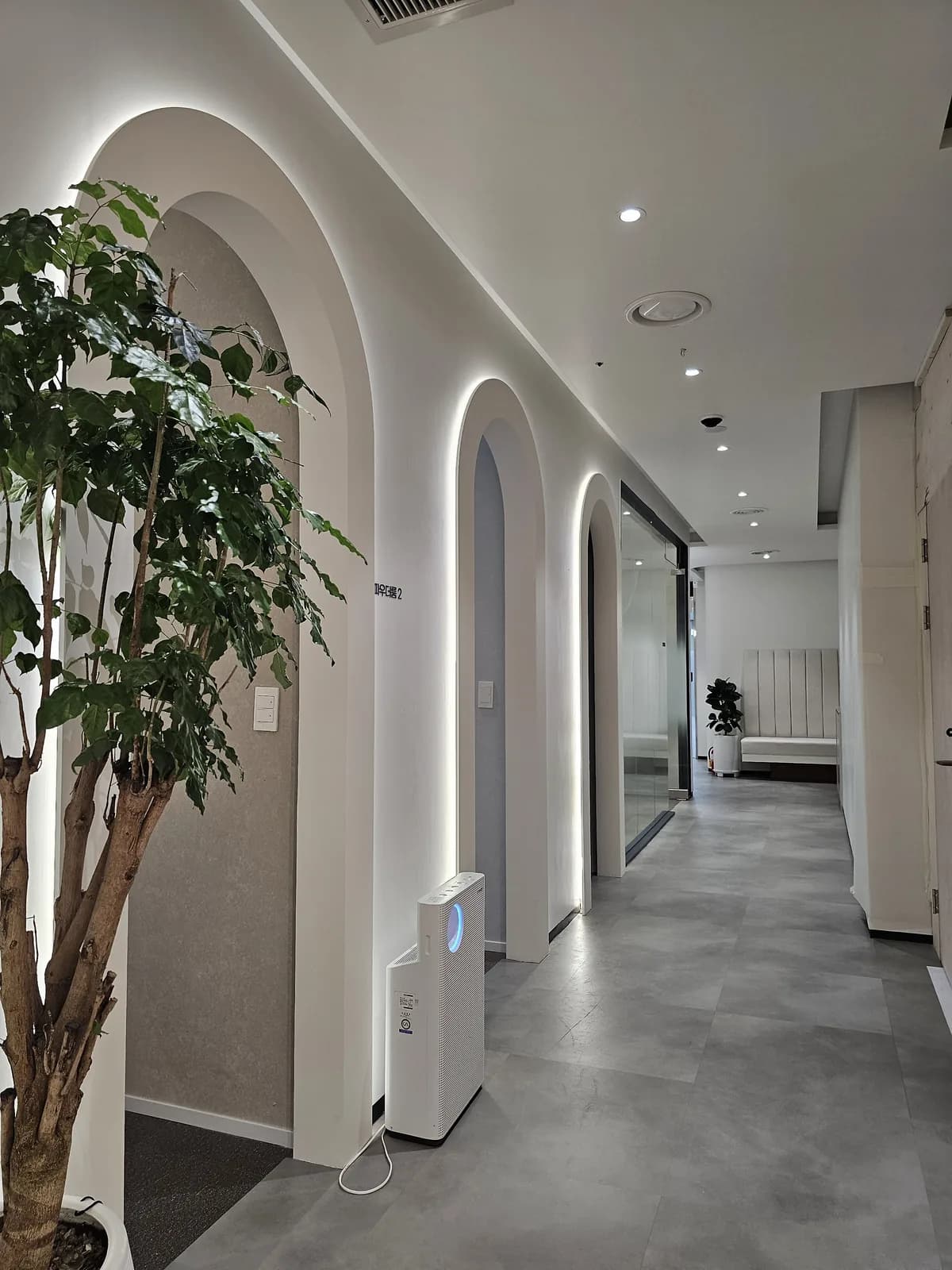
In this article
- 01What is Korean PLLA filler, and how does it differ from hyaluronic acid?
- 02The first fork: is your hollow broad, or is it a single line?
- 03Lips, nose and fine lines usually go to hyaluronic acid
- 04PLLA risks and side effects: pillow face, lumps and blocked vessels
- 05How many sessions does PLLA need, and can that fit a Seoul trip?
- 06What happens at the consultation in Myeongdong
- 07Sculptra or Olidia Volume: the choice is made at the exam
Korean PLLA filler is a poly-L-lactic acid injection that adds little volume on the day; it prompts your skin to lay down its own collagen, so a hollow fills in gradually over the following weeks and across a course of sessions, and results vary from person to person. For anyone flying in, that timing is the catch: most of the change shows up after you're home, so plan your dates around it.
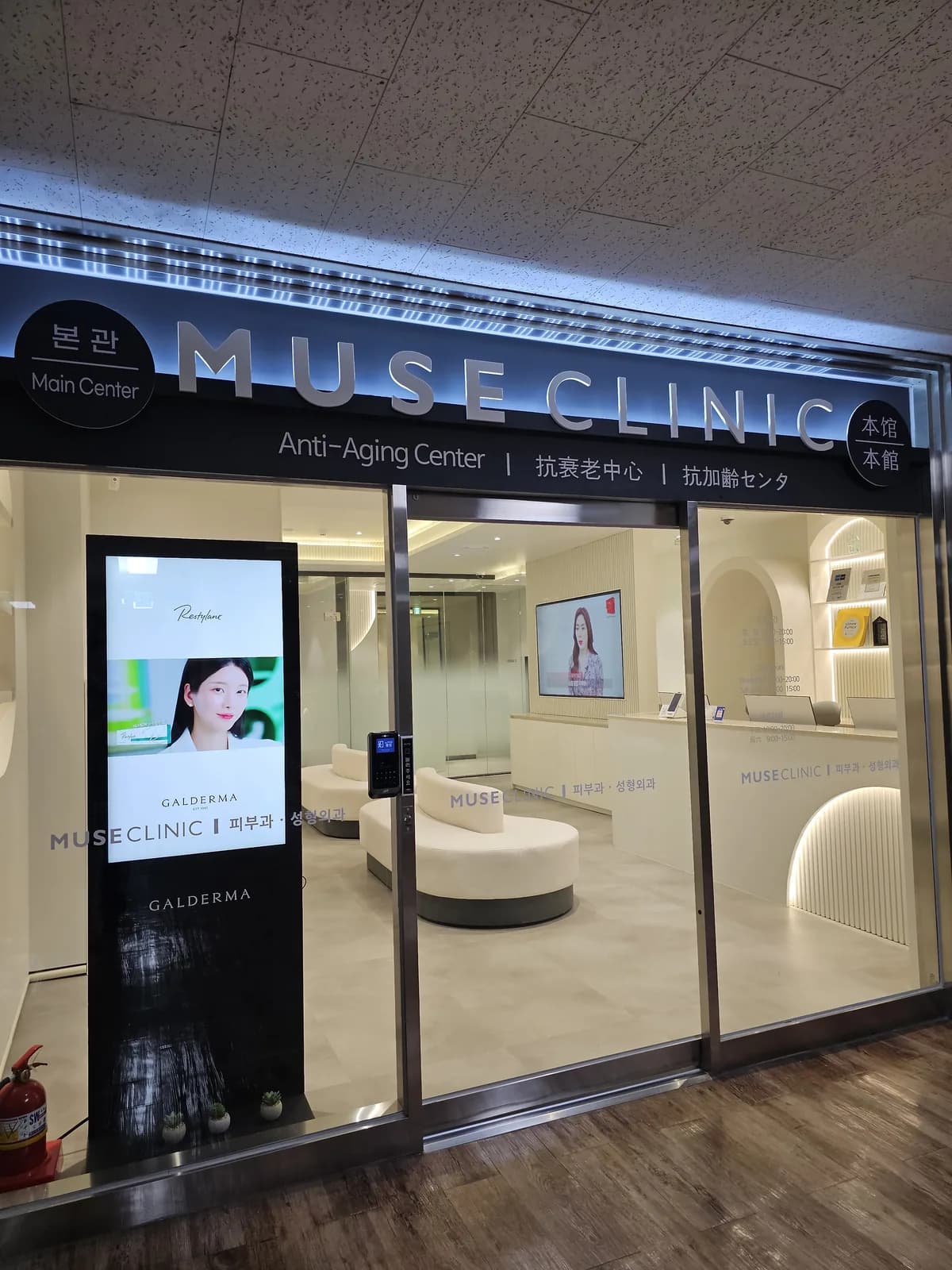
At Muse Clinic Myeongdong, I'm an advisory doctor for Galderma Sculptra and for Olidia, and the clinic is a 1-minute walk from Myeongdong Station Exit 5.
So the useful question is whether your face, your patience and your travel plans match the way a Korean PLLA filler works. I'm Sarang Lim, Head Doctor at the Myeongdong branch, and below are the forks a PLLA consultation walks through, in roughly the order they come up.
If you already know which area bothers you, send your photos and the dates you'll be in Seoul on WhatsApp.
What is Korean PLLA filler, and how does it differ from hyaluronic acid?
PLLA (poly-L-lactic acid) is a synthetic, biodegradable material. The American Society of Plastic Surgeons classes it as a stimulator: it encourages your body's own collagen production, so results appear gradually over a period of a few months instead of on the treatment day.
Hyaluronic acid filler works the other way round. It is a gel that holds water, so the volume you see in the mirror at the end of the appointment is roughly the volume you get. PLLA arrives as a powder that is mixed with sterile water before injection. Part of the early fullness is that water, and it fades within days. What stays is the collagen your tissue builds around the particles as they slowly break down.
| Hyaluronic acid filler | PLLA | |
|---|---|---|
| When volume shows | Same day | Gradually, over weeks |
| Sessions | Often one | Usually a course |
| Reversible | Can be dissolved with an enzyme | Cannot be dissolved |
That last row matters more than people expect. A hyaluronic acid result you dislike can be broken down. A PLLA result has to be waited out, which is one reason the planning happens before the first injection, not after.
There is also a middle option on our menu: Radiesse, a calcium hydroxylapatite filler that gives some volume on the day and also stimulates collagen. When someone wants a visible change before they leave Seoul but likes the idea of collagen building afterwards, it belongs in the same conversation.
The first fork: is your hollow broad, or is it a single line?
PLLA is a filler for surfaces. It suits broad, shallow loss spread across an area: temples that have sunk inward, flattened cheeks, or the sides of the lower face where thinning makes the jaw look heavier. The ASPS notes it is known to work particularly well in the lower half of the face.
The decision here is mostly about where a shadow comes from. Three things are worth checking:
- Volume or laxity. Pinch the skin over the cheek and lift gently.
- Skin thickness. Very thin skin over a hollow temple shows every irregularity underneath, so the product has to be placed deep and spread evenly.
- Light from above. Under ceiling lights, a broad hollow casts a soft shadow across the whole area. A sharp single crease is a different problem.
Two questions from search come up here. Filler in the temples to lift the eyes: restoring a sunken temple can make the outer brow look less dropped, because the brow no longer sits over a hollow, but it does not lift the eyelid itself. Filler in the cheeks to lift jowls: volume in the mid-cheek can soften the jowl shadow when the cause is volume loss higher up. When the jowl comes from skin that has stretched, adding volume above it tends to add weight without much lift.
Lips, nose and fine lines usually go to hyaluronic acid
For a visitor, lips, the nose and fine lines are almost always better served by hyaluronic acid filler. These areas need a precise shape on the day, and the tissue over them is thin and mobile, where a PLLA nodule is easier to feel and see.
A nose filler is about a line along the bridge. A lip filler with mouth-corner treatment is about shape and symmetry at a scale of millimetres. Both are corrections you want to judge in the mirror before you fly, and both can be dissolved if they come out wrong. PLLA gives you neither of those. If you're wondering how hyaluronic acid options are split by area, the overview of facial balancing with filler by area covers that in more detail.
Forehead hollows sit in between.
PLLA risks and side effects: pillow face, lumps and blocked vessels
Pillow face comes from too much volume added over time, and PLLA can contribute to it if sessions are stacked before the previous one has finished building. The more PLLA-specific risk is a firm bump under the skin, which can appear weeks after treatment, when you may already be home.
The U.S. Food and Drug Administration lists the common effects of dermal fillers as bruising, redness, swelling, pain, tenderness and itching, usually in the first days. Among less common risks it lists raised bumps in or under the skin (nodules or granulomas). The most concerning risk with any filler, PLLA included, is unintentional injection into a blood vessel. The FDA describes possible tissue damage, vision problems including blindness, and stroke. These are rare, but they are the reason injection depth and technique matter in every area, lips included.
Who should wait or tell the doctor first
The FDA also notes situations that call for delay or caution:
- an active skin infection or inflammation in the area, such as pimples, cysts or a rash, means the injection should wait;
- a bleeding disorder, severe allergies or a history of anaphylaxis should be told to the doctor;
- safety during pregnancy and breastfeeding is unknown;
- safety in people prone to keloids or hypertrophic scars is unknown.
Candidacy is decided at the in-person exam, after the doctor has looked at the skin and the area directly. Results vary with age, skin thickness and how your tissue responds to the product, which is also why the volume built after each session is hard to predict exactly.
The PLLA problem I take most seriously is a firm bump someone notices at home two months later, more than anything that happens in the first week. That is why I would rather you leave Seoul with a little less volume than you hoped for than with an extra dose meant to make up for a session you can't come back for. If something feels lumpy once you're home, a local dermatologist can examine it, and they will want to know which product was injected, where and when.
If you've had filler before, send a photo of the area on WhatsApp along with the product name and the month it was injected, if you know them.
How many sessions does PLLA need, and can that fit a Seoul trip?
Our menu reflects that: Olidia Volume is listed both as a single session and as a 3-session course.
For someone who lives abroad, that leaves three realistic patterns:
- 01Return trips. If you visit Seoul every month or two for work or family, a course fits around the visits you already make.
- 02One session, a partial result. Some people accept a smaller, slower change from a single session. It is a reasonable choice if you understand beforehand that one session is part of a course.
- 03Hyaluronic acid instead. If this is your only trip, a filler that shows its volume on the day may simply fit your calendar better.
After a PLLA session, the instructions commonly include massaging the treated area for several days at home, so it helps to plan a few days without heavy makeup routines or facials on that area. The U.S. Centers for Disease Control and Prevention advises medical travellers to get copies of their records and to plan follow-up care at home before they leave. For PLLA, that means the product name, the areas and the date, kept somewhere you can show a doctor at home.
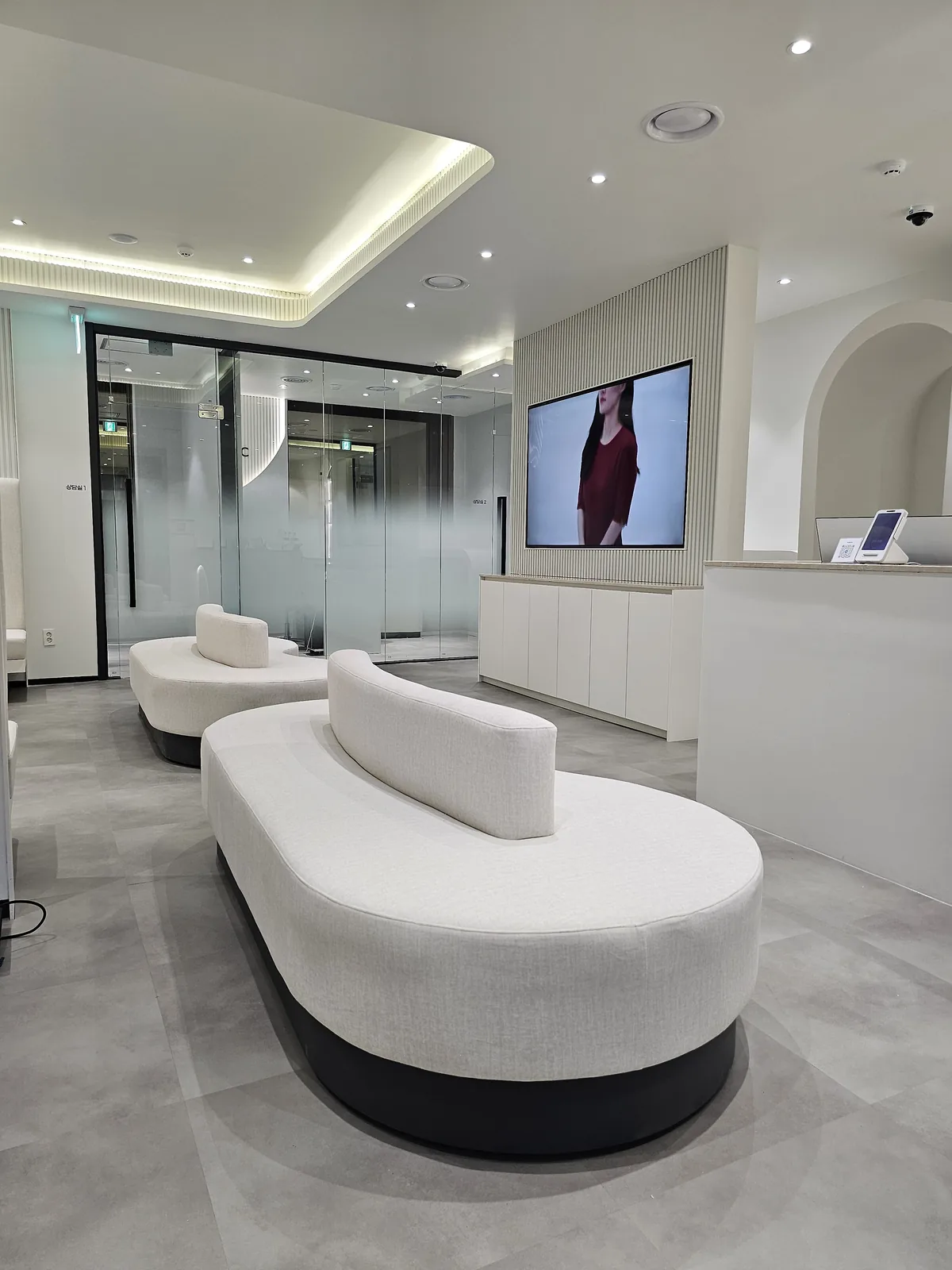
Clinic hours help with tight schedules. We are open Monday to Friday from 10:00 AM to 8:00 PM, and Saturday and Sunday from 9:00 AM to 3:00 PM, so a weekend morning appointment can sit before an afternoon at the hotel.
What happens at the consultation in Myeongdong
The clinic is on the 3rd floor of Korea Daeyungak Tower, 97 Toegye-ro, a 1-minute walk from Myeongdong Station Exit 5 on Line 4. An interpreter is with you from the first conversation to the injection.
The building has a Twosome Place café and Hana Bank on the ground floor, and it is also near Hoehyeon Station Exit 7, across from Shinsegae Department Store. English, Japanese and Chinese interpreters are in the clinic.
At the consultation, the useful things to bring are: the date you fly home, any earlier filler with product names and dates, and a clear idea of which area you'd change if you could change only one. With PLLA the doctor is weighing the total amount of product the area needs, how many sessions it can be divided into, and whether your travel plans allow the gaps between them.
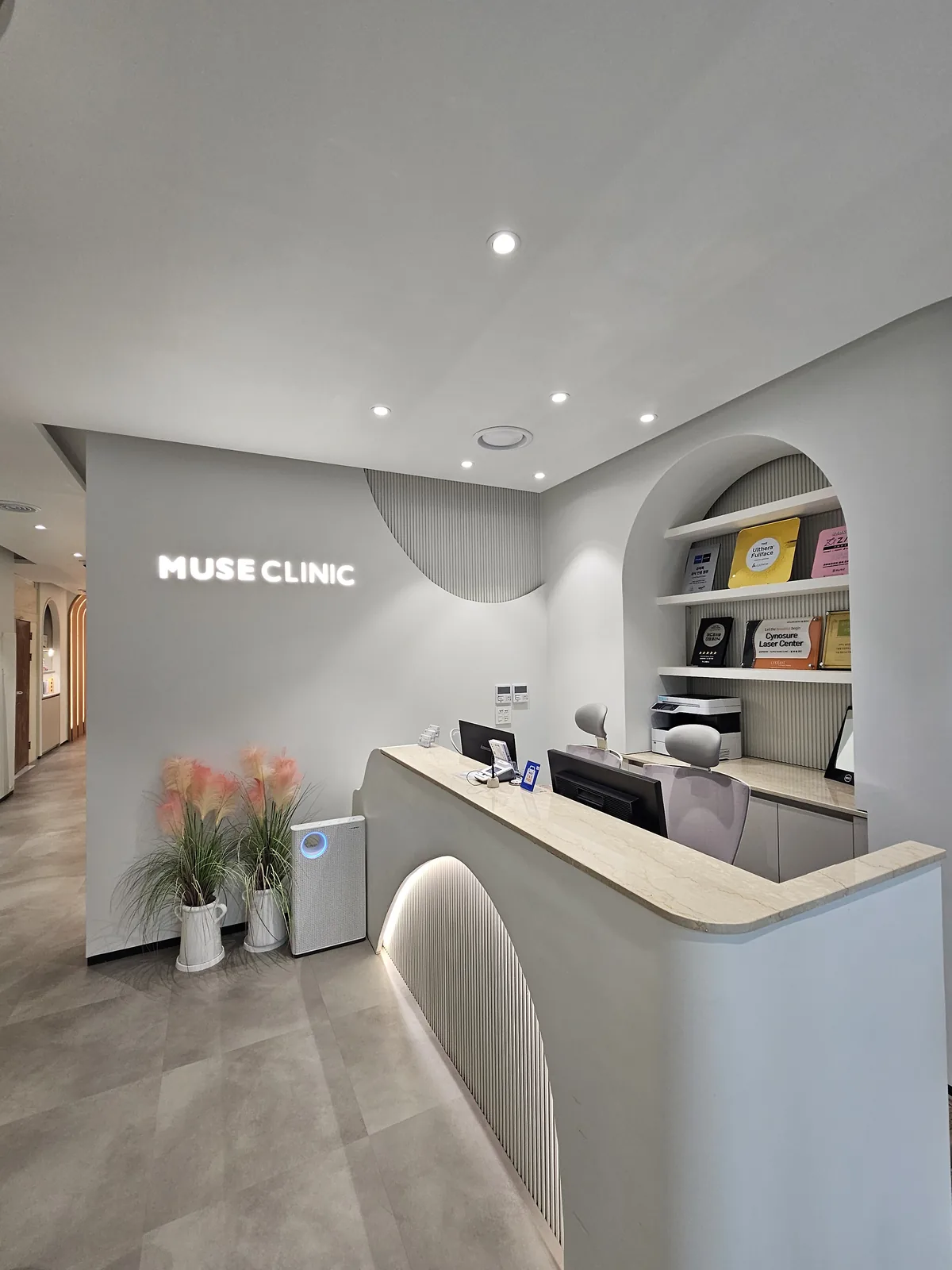
On credentials: I trained at Inje University College of Medicine and completed residency training at Paik Medical Center (Inje University). I am a member of the Korean Academy of Aesthetic Plastic & Laser Medicine and the Korean Society of Aesthetic Surgery, and I'm listed as an advisory doctor for both Galderma Sculptra and Olidia. The full list is on the doctor page. Muse Clinic has 11 branches in Korea, and this is the Myeongdong branch.
If your trip dates are fixed, send them on WhatsApp together with one photo of the area.
Sculptra or Olidia Volume: the choice is made at the exam
Olidia Volume is listed on our menu as a PLLA collagen booster for volume improvement; Sculptra is the PLLA product many readers already know by name. Which one is used depends on the area, the total amount the area needs and how the sessions are spread, and that is decided face to face.
You can see both on the Sculptra treatment page and the Olidia Volume treatment page, and the full treatments menu shows where PLLA sits next to hyaluronic acid facial filler. If your main concern is skin texture and glow more than volume, the in-clinic plan for Korean glass skin is closer to what you're after, and the Seoul filler list by area lays out the hyaluronic acid side.
The smallest useful first step is one message. Send on WhatsApp the month you could come back to Seoul, if at all, and a side-light photo of the hollow you'd change first.
Questions people ask
Before you message us
Is PLLA filler the same thing as a collagen stimulator?
Yes, in practice the two terms describe the same idea. The American Society of Plastic Surgeons classes poly-L-lactic acid as a stimulator because it prompts your body to produce collagen, so results appear gradually over a few months. It is still called a filler because it is injected to restore volume, but it does not fill space the way a hyaluronic acid gel does.
How long after a PLLA session will I see a change?
The ASPS says each result can take four to six weeks to fully appear, and that about three monthly treatments are likely needed. The fullness right after injection is partly water used to mix the product, and it fades within days. For a traveler, this means the change you came for mostly shows up after you are back home.
Can PLLA filler be dissolved if I don't like it?
No. Hyaluronic acid filler can be broken down with an enzyme, but PLLA cannot, so a result you dislike has to be waited out while the body clears it. This is the main reason PLLA is planned conservatively, in smaller amounts across sessions, and why lips and the nose are usually treated with hyaluronic acid instead.
Can I get Korean PLLA filler in one trip to Seoul?
You can have a single session in one trip, but PLLA is normally given as a course, and our menu lists Olidia Volume both as one session and as a 3-session course. One session gives a partial result. If you cannot come back, a hyaluronic acid filler that shows its volume on the day may fit your calendar better.
What should I tell a doctor at home after PLLA in Korea?
Tell them the product name, the areas injected and the date of each session. The CDC advises medical travellers to carry copies of their records and plan follow-up care before leaving. If a firm bump appears weeks later, a local dermatologist can examine it, and that information helps them decide what to do.
Results and maintenance period vary by individual. Every procedure carries the possibility of side effects, which are explained before you agree to treatment. Prices exclude 10% VAT and event prices may change. This article is general information from the clinic and is not a diagnosis; suitability is decided at the consultation.
Written by
Dr. Sarang Lim
Head Doctor · Muse Clinic Myeongdong
- Education & training
- Graduated, Inje University College of Medicine · Residency training, Paik Medical Center (Inje University) · Sungkyunkwan University Graduate School, Master's degree · Indiana University Kelley School of Business
- Advisory & certification
- Cynosure — Certified laser center · Juvéderm — Advisory doctor · QT Fill — Advisory doctor · Olidia — Advisory doctor · Galderma Sculptra — Advisory doctor · Merz — Advisory doctor · Jeisys — Advisory doctor · NOVA Thread — Advisory doctor
- Academic societies (full member)
- Korean Academy of Aesthetic Plastic & Laser Medicine · Korean Society of Aesthetic Surgery · Korean Society of Obesity Research Medicine · Korean Society of Obesity & Aesthetic Medicine · Korean Society of Anti-Aging Medicine