Fillers & Volume
Korean Sculptra: Sessions, Spacing and Trips
Korean Sculptra is the same Galderma product, given as a series about a month apart. How the sessions fit a short Seoul trip, the risks, and options.
 Dr. Sarang LimHead Doctor, Muse Clinic Myeongdong · 9 min readMedically reviewed by Sarang Lim, M.D., Head Doctor · Edited by: Sarang Lim, M.D.
In this article
- 01Can you get Sculptra in Korea, and is it the same product?
- 02A series, not a single visit
- 03How does a short trip fit three sessions a month apart?
- 04The mirror on day one isn't the result
- 05What are the risks of PLLA injections, and who should wait?
- 06Why buying it online is a different thing
- 07Hips and body areas need their own plan
- 08If one visit is all you have, what else is on the table?
- 09What to bring to a consultation in Myeongdong
Land at Incheon on Friday evening, take the train into Myeongdong, and you can be sitting in a 9 a.m. Saturday consultation the next morning. That part of a Korean Sculptra plan is easy. The part that surprises most visitors comes a few minutes later, when the conversation turns from your face to your calendar.
You can get Sculptra in Korea, and the product on our menu is the poly-L-lactic acid (PLLA) injectable made by Galderma. What makes Korean Sculptra different from a quick filler appointment is that it works slowly and is usually given as a series. If you're fitting it into a long weekend, the number of trips you can make matters as much as anything about your skin.
Can you get Sculptra in Korea, and is it the same product?
Yes. The product sold in Korea is the same Galderma PLLA injectable sold elsewhere, and at Muse Clinic Myeongdong it appears on the menu under its brand name. I'm listed as a Galderma Sculptra advisory doctor.
Some people search for a "Korean version" after reading forum threads about other products; those are separate products and this article doesn't cover them. It covers what our PLLA treatment page lists.
The American Society of Plastic Surgeons describes polylactic acid as a synthetic material that has been used for decades as suture material and, when injected, prompts your own collagen production.
A series, not a single visit
Most people need more than one session. According to the American Society of Plastic Surgeons, you will likely need about three monthly treatments, and results appear gradually over a few months.
Our menu reflects that. It lists a one-vial, one-session option and a one-vial, three-session option, because a temple hollow and years of cheek flattening are not the same job, and neither are one trip and three. Someone with mild hollowing at the temples is in a different position from someone whose cheeks have flattened over years.
What decides the number of sessions is not a formula. In the exam I look at where volume has gone (temples, mid-cheek, the area along the jaw), how thin the skin is over those spots, and what you're hoping to change. Thin skin over a deep hollow usually calls for smaller amounts spread across more sessions, not one heavy visit.
On a single-trip plan, the under-eye is a poor place to start with PLLA. The skin there is thin, a nodule shows more easily, and there is no second visit to adjust. Temples and the mid-cheek, where the tissue is thicker, are generally more forgiving for a first session. And a plan that needs three sessions doesn't fit someone who can come once; I'd rather we see that in the first ten minutes than after the first injection.
How does a short trip fit three sessions a month apart?
A three-session plan fits if you can come back, and fits less well if you can't. A single trip covers the consultation and the first session; later sessions need later trips, roughly a month apart if you follow the spacing the ASPS describes.
Here is how this tends to play out for two kinds of visitors:
| Your situation | What usually works | What you give up |
|---|---|---|
| Living in Asia, can return every 4–6 weeks | The full series, booked on weekends | Three short trips instead of one |
| Flying in once from far away | One session, understood as a partial result | The full effect a series is designed for |
The clinic's hours help weekend visitors. We're open Saturday and Sunday from 9:00 AM to 3:00 PM, and Monday to Friday from 10:00 AM to 8:00 PM, so a Friday-night arrival fits a Saturday-morning visit. The clinic is a 1-minute walk from Myeongdong Station Exit 5 on Line 4, on the 3rd floor of Korea Daeyungak Tower.
If you're an English teacher in Busan or working in Tokyo or Taipei, the series can be booked around weekend flights. If you're coming from Sydney or Toronto for one week, it's worth knowing before you book that one session is the start of something, not the whole thing.
The mirror on day one isn't the result
The fullness you see right after the session fades within days. PLLA is mixed with fluid before injection, and that fluid is absorbed. The change that lasts comes from collagen, which ASPS describes as appearing gradually over a few months.
This catches people out in two ways. Some feel pleased on the first evening and disappointed by day four, because the early plumpness has gone and the collagen hasn't built yet. Others take a photo at the hotel and assume that is the final look.
There's also an aftercare habit you may hear about: massaging the treated area for several days after the session. Whether and how to do it is something the doctor explains at the visit for your specific areas, so it's worth asking the interpreter to repeat the instructions until you're sure you have them.
What are the risks of PLLA injections, and who should wait?
The common effects are local and temporary: bruising, redness, swelling, tenderness and some pain at the injection sites. The U.S. Food and Drug Administration lists these for injectable fillers in general, along with less common bumps under the skin (nodules or granulomas), infection and allergic reaction.
The FDA calls "unintentional injection into a blood vessel" "the most concerning risk" of dermal fillers. It is rare, and it can block blood supply to tissue. The FDA advises seeking immediate medical attention for unusual pain or vision changes. For a traveler, this is the reason not to book an injection for the morning you fly home. Give yourself time in Seoul after the session.
With PLLA, nodules are the side effect worth understanding most. Placement depth, dilution and even spacing all play a part, which is one reason a thin area such as the under-eye is approached with more caution than the temples or cheeks.
Some people are better off waiting:
- an active rash, infection or inflamed acne in the area to be treated
- pregnancy or breastfeeding, when aesthetic injections are generally postponed
- a big event within the next week, since bruising can last several days
- a trip plan with no time in Seoul after the session
Results and how long they last vary from person to person. The in-person exam, not this article, decides whether this treatment suits you.
Why buying it online is a different thing
The FDA says: "Do not purchase dermal filler products online, because they could be counterfeit products." It also states it has not approved any dermal fillers for "over-the-counter (OTC) use."
PLLA is a product a doctor reconstitutes, doses and places in a specific layer of tissue, so the injector and the product source both matter.
Hips and body areas need their own plan
Body areas are on the menu too: it lists an Apple Hip Package and a 10-vial option. A hip or buttock area is a separate plan from the face, with its own vial count, session spacing and aftercare, and the exam decides whether it suits you. Results vary from person to person.
If one visit is all you have, what else is on the table?
A one-trip visitor still has choices. A single PLLA session is one. Two others on our menu behave differently on the timeline, which matters when you can't come back.
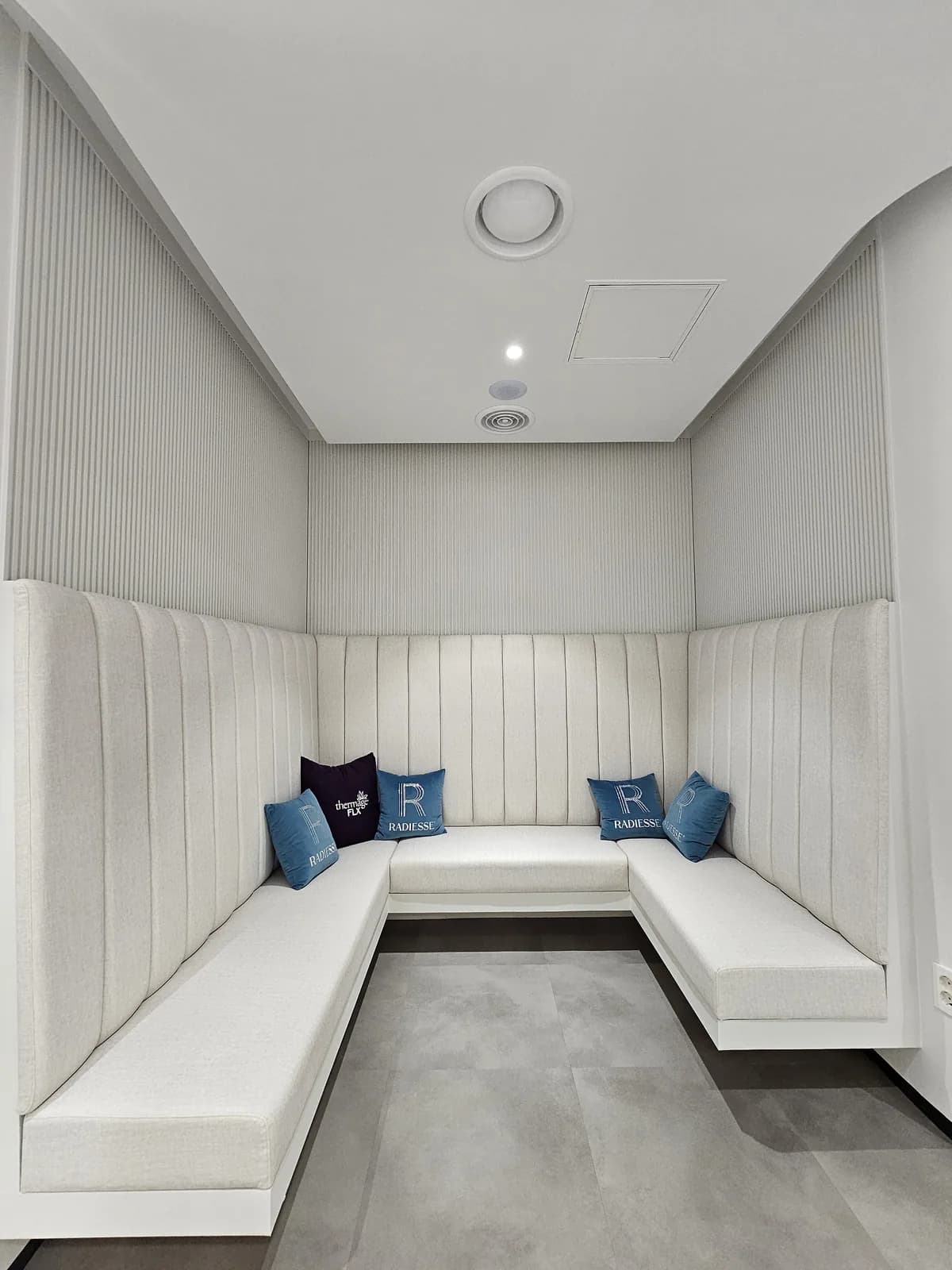
Radiesse is a calcium hydroxylapatite injectable that gives volume right away and also encourages collagen over time. A hyaluronic acid filler such as Juvéderm gives a visible change on the day, and its maintenance depends on the product and the area. Neither replaces PLLA in every face. They are different tools, and the exam decides which fits the area you care about.
If what bothers you is looseness rather than lost volume, a lifting device may be the better conversation. The overview of Korean skin tightening options covers those, and the guide to Korean skin treatment in Seoul helps if you're still deciding what category your concern falls into. The full menu is on the treatments page.
What to bring to a consultation in Myeongdong
Bring your travel dates, a list of anything injected into your face before (product and roughly when, if you know), and any medications you take. Fillers placed elsewhere in the past change how the doctor plans the areas.
The CDC's medical tourism advice suggests getting copies of all your medical records before you return home and making sure follow-up care is available where you live. Note the product name and the treated areas before you leave Seoul, so a doctor at home knows what was placed.
English, Japanese and Chinese interpreters are in the clinic, and someone stays with you from consultation through treatment, so you don't need to prepare medical vocabulary. You can read about my training and memberships on the doctor page.
On WhatsApp, send one line saying how many times you could be in Seoul over the next three months, with a front and side photo of the area you're thinking about if you're comfortable sharing it. We'll set up the consultation around your dates, and whether a series, a single session or something else makes sense is decided there.
Questions people ask
Before you message us
Is the Sculptra used in Korea the genuine product?
At Muse Clinic Myeongdong, the product on the menu is the Galderma poly-L-lactic acid injectable, listed under its brand name. Searches for a "Korean version" refer to separate products. If you want to be sure what is used on you, ask to see the product name at your consultation; the interpreter can help you ask.
How many PLLA sessions will I need?
The American Society of Plastic Surgeons says most people need about three monthly treatments. The actual number depends on the amount of volume lost, how thin the skin is over the area, and what you hope to change. The doctor decides this after examining you, and individual results vary.
Can I fly home the day after a collagen stimulator session?
Many people do travel after injectables, but it's wiser to leave time in Seoul after the session rather than injecting on departure morning. Bruising and swelling are common, and the rare vascular complication needs prompt medical attention. Plan at least some buffer between the session and your flight, and confirm timing with the doctor.
When will I see results from poly-L-lactic acid?
Not on the day. The early fullness comes from the fluid the product is mixed with, and it fades within days. According to the American Society of Plastic Surgeons, results appear gradually over a few months as your own collagen builds. How long they last differs from person to person.
Can I buy Sculptra online and have it injected?
The FDA advises patients not to purchase dermal filler products online because they could be counterfeit, and states it has not approved any dermal fillers for over-the-counter use. PLLA needs to be prepared, dosed and placed by a doctor, so the product source and the injector matter as much as the brand name.
Results and maintenance period vary by individual. Every procedure carries the possibility of side effects, which are explained before you agree to treatment. Prices exclude 10% VAT and event prices may change. This article is general information from the clinic and is not a diagnosis; suitability is decided at the consultation.
Written by
Dr. Sarang Lim
Head Doctor · Muse Clinic Myeongdong
- Education & training
- Graduated, Inje University College of Medicine · Residency training, Paik Medical Center (Inje University) · Sungkyunkwan University Graduate School, Master's degree · Indiana University Kelley School of Business
- Advisory & certification
- Cynosure — Certified laser center · Juvéderm — Advisory doctor · QT Fill — Advisory doctor · Olidia — Advisory doctor · Galderma Sculptra — Advisory doctor · Merz — Advisory doctor · Jeisys — Advisory doctor · NOVA Thread — Advisory doctor
- Academic societies (full member)
- Korean Academy of Aesthetic Plastic & Laser Medicine · Korean Society of Aesthetic Surgery · Korean Society of Obesity Research Medicine · Korean Society of Obesity & Aesthetic Medicine · Korean Society of Anti-Aging Medicine