Lifting & Tightening
Korea PDO Thread Count: Why More Isn't More Lift
A Korea PDO thread count tells you less than you think: lift comes from a few cog threads per side. Dr. Sarang Lim explains how many, and what to send…
 Dr. Sarang LimHead Doctor, Muse Clinic Myeongdong · 10 min readMedically reviewed by Sarang Lim, M.D., Head Doctor · Edited by: Sarang Lim, M.D.
Myeongdong Station, Exit 5 · English interpreters on site
Ask us on WhatsApp
In this article
- 01Reading a Korea PDO thread count: what the number measures
- 02Does adding more threads give you a bigger lift?
- 03How many threads a typical plan uses
- 04When a higher count is the wrong fix
- 05Bruising, puckering and thread ends: what to expect after
- 06Planning your days in Seoul around the threads
- 07What decides the number for me
Not sure whether the Korea PDO thread count on your quote is too high, too low, or just a way to make the bill bigger?
More threads don't make a stronger lift. The lifting is done by a few barbed (cog) threads anchored along the lines where your tissue has dropped, commonly two to five per side for a jawline or lower cheek. The dozens of smooth mono threads you see in some plans mainly work on skin texture.
Hello, I'm Dr. Sarang Lim, Head Doctor at Muse Clinic Myeongdong.
I'm an advisory doctor for NOVA Thread, and every plan here starts with a consultation. An interpreter for your language sits in at no extra charge and stays with you through the treatment, and then I plan and perform the threads myself, one to one. Our thread lifting prices are published on the site and are the same for Korean and foreign patients, so you can see what each option costs before you book a flight.
If you already have a quote, send it on WhatsApp with one front photo and one side photo taken in daylight, and ask whether that number matches where your face is actually sagging.
Reading a Korea PDO thread count: what the number measures
PDO (polydioxanone) is the same dissolvable material used in surgical stitches. The body usually breaks it down over roughly six months, and while it's there it sets off a mild healing response that lays down some collagen around each thread. That much is true of every PDO thread. What differs is the shape.
Smooth mono threads are hair-thin and come preloaded in fine needles. They don't grip anything. Placed as a mesh under the skin, they work on texture and a little firmness, which is why a plan can list 20 or 40 of them for one area without that being excessive.
Cog threads have tiny barbs cut along their length. Once placed, the barbs catch the tissue and hold it in a new position, and that is the part people feel as lift. They are thicker, go in along a planned line called a vector, and are used in much smaller numbers.
So a single headline number mixes two different jobs. When you compare plans, ask for it split three ways: how many cogs, how many monos, and where each one goes. That breakdown tells you more about a plan than the total ever will, and it's the one question I'd ask any clinic before comparing anything else.
Does adding more threads give you a bigger lift?
Only up to a point. A cog thread lifts because it is anchored at one end and holds along a line. Once the lines your face needs are covered, an extra cog in the same tissue doesn't pull harder. It adds another channel of swelling, another entry point, and another place where a barb can pucker the skin.
Think of hanging a heavy curtain. Two hooks on a solid rail hold it up. Eight hooks on a weak rail still sag. With threads, the rail is the thickness of your skin and the amount of tissue that has to be held. If there is more weight than threads can carry, a higher count won't fix that.
The opposite mistake happens too. Too few cogs on a wide jawline can leave the lift patchy, with one segment held and the next one hanging. What you want is the number that covers the lines your face needs, which is why the count should come out of an examination of your face rather than a package written in advance.
Smooth monos follow different logic. More of them across an area makes a denser mesh, which can matter if texture is your goal. They still won't lift a jowl, whatever the count.
How many threads a typical plan uses
In short, these ranges are general patterns in thread lifting, not this clinic's packages.
| Thread type | What it does | How many are commonly placed |
|---|---|---|
| Smooth mono | Texture, mild firmness | Often dozens across one area |
| Cog (barbed) | Holds tissue in a lifted position | Commonly 2 to 5 per side for jaw or lower cheek |
| Jamber thread (on our menu) | Lifting and volume at the same time | Planned at the consultation |
Our menu has two thread treatments, Thread Lifting and Jamber Thread Lifting, and you can see our thread lifting options and their published prices before you message anyone.
Say you're 30, teaching English in Busan, and you've noticed your jawline softening, a little more on the left. You have a long weekend in Seoul. Your skin is reasonably thick and your cheeks still have their volume. For that face I'd think about a small number of cogs along the jawline on each side, possibly one more on the left, and I'd only add monos if you also want texture work.
A forty-thread plan for that face would be mostly monos, and you'd be paying for texture you may not have asked for.
Now change one detail: your cheeks have hollowed and the skin is thin. Then the sag is partly lost volume, and pulling thin skin over a hollow can make threads easier to see. The conversation moves to volume first. Jamber, which our menu describes as lifting and volume at the same time, or filler, comes into it, and the cog count may go down.
Genuine product in the right amount is the rule I work by, and with threads the right amount is a count. I would rather place three cogs on the lines that matter than ten that crowd the same tissue. If your face needs more support than threads can give, I'd rather say so at the consultation than add threads to make a plan look bigger.
When a higher count is the wrong fix
A downturned mouth corner is the most common example. Often the corner is being pulled down by a muscle, and threads in the cheek won't change that pull. A mouth-corner lift injection that relaxes that muscle usually addresses it more directly than another pair of cogs.
Heavy jowls or a lot of loose neck skin are the second. Threads hold tissue in place; they don't remove any.
Active breakouts along the jaw are the third. Every entry point through inflamed skin raises the chance of infection, so it makes sense to get the acne under control first and book threads on a later trip. Very thin skin is the fourth: barbs and thread ends are easier to see and feel, which argues for fewer, deeper-placed threads or for volume instead.
If you've had threads or filler in your lower face before, mention when and roughly what was done when you write on WhatsApp, along with your Seoul dates. Old threads and settled filler change how many new threads make sense for you.
Bruising, puckering and thread ends: what to expect after
The usual reactions are temporary. Swelling and bruising along the entry points tend to be most visible in the first two or three days and fade over a week or two. Tightness or soreness when you open your mouth wide, chew or yawn often lasts a couple of weeks. Small dimples or puckers where a barb has caught usually relax as the swelling goes down, and some unevenness in the first days is common while one side settles faster.
Less often, a thread end works its way toward the surface, an entry point gets infected, a pucker doesn't settle, or a nerve is irritated and causes tingling. The American Society of Plastic Surgeons' thread lift safety page names infection, dimpling and visible threads among the risks. A thread that causes trouble can usually be trimmed or removed.
As general medicine, it's worth waiting if you are pregnant or breastfeeding, if you have an infection or breakouts in the area, or if you've had filler or an energy-based treatment there recently. Blood thinners, bleeding problems, autoimmune conditions or a tendency to keloid scars are things to raise at the consultation before any thread goes in. Thread results vary with skin thickness, how much tissue is being held and how your body absorbs PDO, so how long the lift lasts differs from person to person.
The weeks after a thread lift and what usually changes over them are covered separately.
The tip people miss: before you leave Seoul, write down exactly what was placed, meaning the thread type, how many cogs and how many monos, and which areas. If a doctor at home ever needs to see you, that is the first thing they'll ask, and nobody can tell it from looking. If you notice increasing redness, heat, pus, fever or a thread end poking through after you're home, see a local doctor promptly, and send a photo on WhatsApp as well.
Planning your days in Seoul around the threads
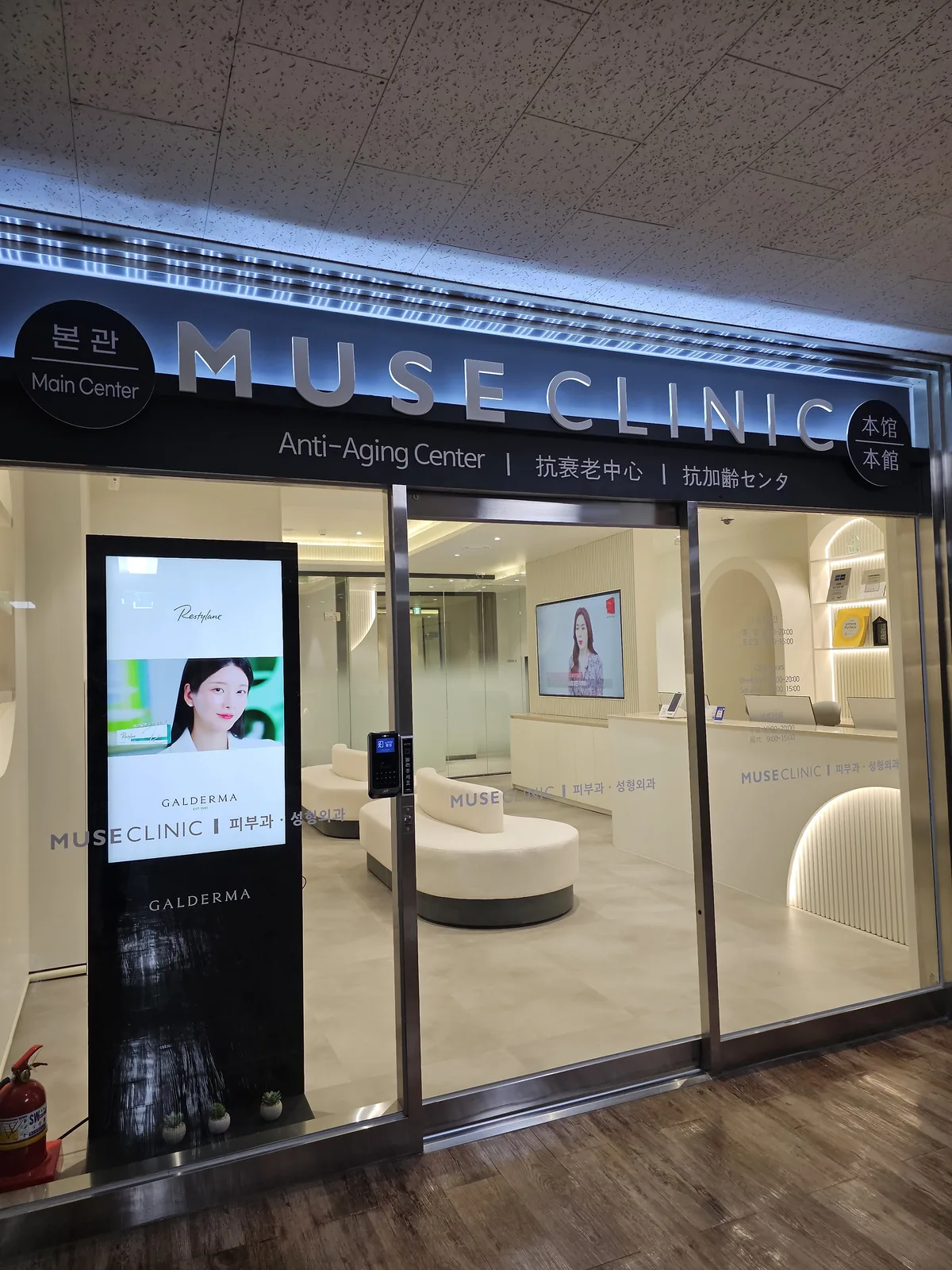
The clinic is open Saturday and Sunday from 9:00 AM to 3:00 PM, and weekdays from 10:00 AM to 8:00 PM. It's on the 3rd floor of Korea Daeyungak Tower, a one-minute walk from Myeongdong Station Exit 5 on Line 4. If you arrive Friday night, a Saturday morning appointment leaves you the rest of the weekend.
The swelling often looks a little worse on day two or three than on day one, so plan photos and big dinners with that in mind. For the first couple of weeks, the general advice is to avoid pressing or massaging the face, sleeping face down, dental work, and anything that makes you open your mouth very wide. Walking around Myeongdong is fine; a hard workout is better left for later.
What decides the cost of a thread plan
Then come the areas (jawline only, or cheeks and neck too), whether texture work is added, and whether you combine threads with another treatment on the same trip. Listed prices exclude 10% VAT, and foreign patients pay the same listed prices as Korean patients.
Before you book flights, send the areas you want treated and a side photo on WhatsApp, and ask what that would come to for your case. Ask about the deposit and payment method in the same message; those are settled after the consultation.
What decides the number for me
Three things set a count more than anything on a menu: where your tissue has dropped when you're sitting upright, how thick your skin is over those lines, and whether volume has gone along with firmness. Previous threads or filler come next, because old material changes where new threads can sit. If you'd like the wider picture first, there's a separate overview of PDO thread lifting options in Seoul, and you can read my training and society memberships.
The final plan, the count included, is confirmed at your consultation in Myeongdong.
Send the dates you'll be in Seoul and one daylight photo of your face from the side on WhatsApp, and ask the question a total thread count can't answer: does my jawline need lifting, or volume? One photo is enough to start, and you can ask before you book anything.
Questions people ask
Before you message us
Can I add more threads later if the first count wasn't enough?
Usually, yes. Many doctors prefer to wait until the swelling has fully settled, often several weeks, before judging whether a line needs another cog, because early swelling can make the lift look stronger or weaker than it is. If you live abroad, this is a reason to start with the count your face needs on the first visit and keep a written record of what was placed.
When the PDO dissolves, does the lift disappear with it?
PDO is usually absorbed over about six months. The mechanical hold from the barbs fades as the thread breaks down, while some of the collagen laid down around the threads can remain for a while longer. That is why people often notice a gradual softening rather than a sudden drop, and why some plan a repeat session.
Does a higher thread count mean more pain?
Each thread is another entry point, so more threads usually means more spots that feel sore and bruise. Soreness when chewing or yawning for one to two weeks is common, and it tends to be more noticeable with cog threads than with fine monos.
Can I do threads and an energy-based lifting device on the same trip?
It is possible, but the order matters. Heat from devices such as ultrasound or RF over freshly placed threads is something many doctors avoid, so the device is often done first or the two are spaced apart. Our menu includes devices like Ulthera, SHURINK UNIVERSE and DENSITY; mention which one you're considering so the order can be planned around your dates.
Will I be able to see or feel the threads under my skin?
In thicker skin, threads usually can't be seen, though you may feel a firm line under your fingers for a few weeks. In thin skin, or when a thread sits too shallow, an edge or a small ridge can show. Most of these flatten as swelling settles; a ridge that stays visible after a few weeks should be checked by a doctor.
Results and maintenance period vary by individual. Every procedure carries the possibility of side effects, which are explained before you agree to treatment. Prices exclude 10% VAT and event prices may change. This article is general information from the clinic and is not a diagnosis; suitability is decided at the consultation.
Written by
Dr. Sarang Lim
Head Doctor · Muse Clinic Myeongdong
- Education & training
- Graduated, Inje University College of Medicine · Residency training, Paik Medical Center (Inje University) · Sungkyunkwan University Graduate School, Master's degree · Indiana University Kelley School of Business
- Advisory & certification
- Cynosure — Certified laser center · Juvéderm — Advisory doctor · QT Fill — Advisory doctor · Olidia — Advisory doctor · Galderma Sculptra — Advisory doctor · Merz — Advisory doctor · Jeisys — Advisory doctor · NOVA Thread — Advisory doctor
- Academic societies (full member)
- Korean Academy of Aesthetic Plastic & Laser Medicine · Korean Society of Aesthetic Surgery · Korean Society of Obesity Research Medicine · Korean Society of Obesity & Aesthetic Medicine · Korean Society of Anti-Aging Medicine