Lifting & Tightening
Korea PDO Thread Size: Mono vs Cog, Days in Seoul
Korea PDO thread size ranges from fine mono to thicker cog threads; the cog ones decide swelling and days in Seoul. Plan your stay, flight and care at…
 Dr. Sarang LimHead Doctor, Muse Clinic Myeongdong · 10 min readMedically reviewed by Sarang Lim, M.D., Head Doctor · Edited by: Sarang Lim, M.D.
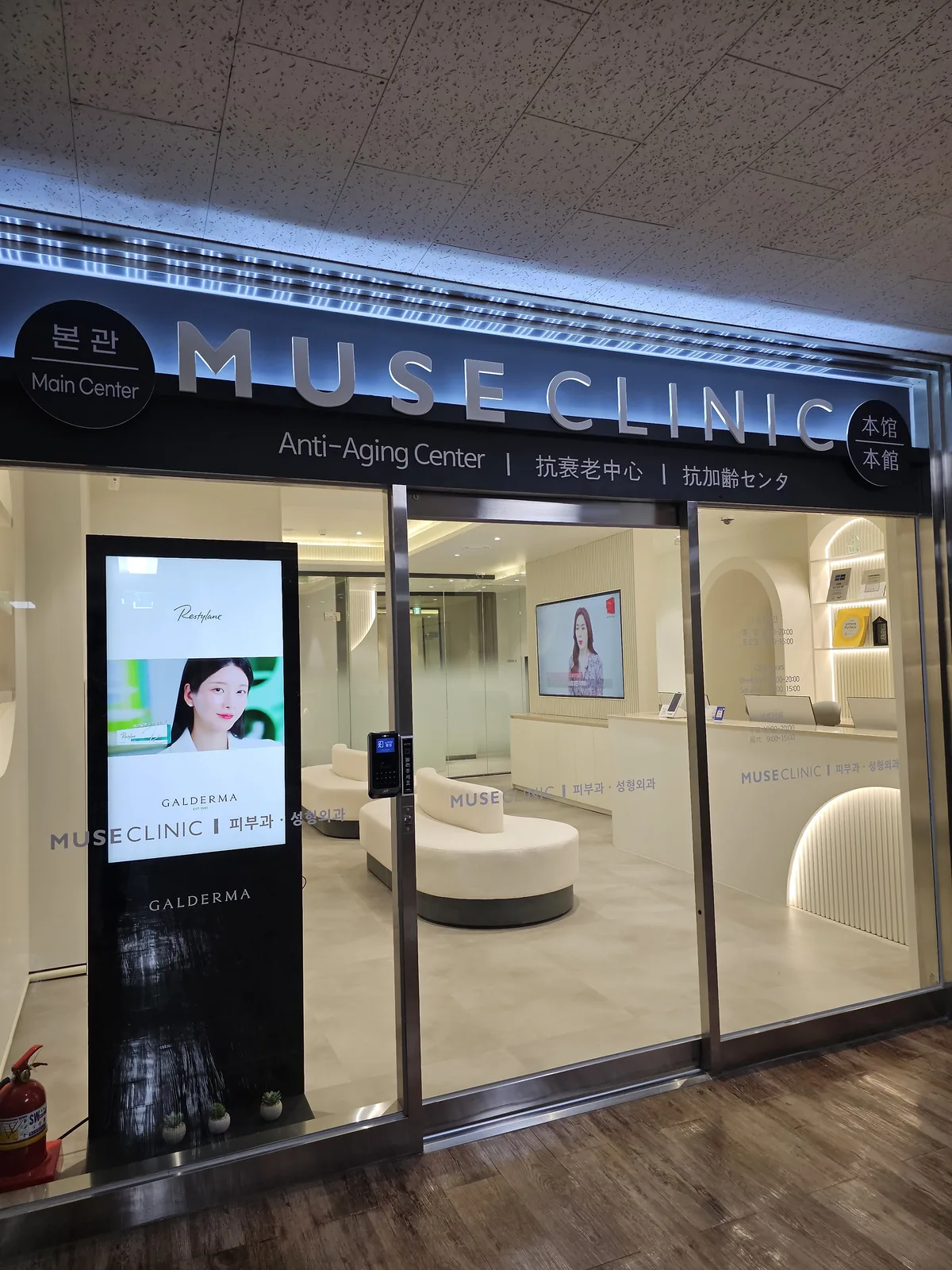
Myeongdong Station, Exit 5 · English interpreters on site
Ask us on WhatsApp
In this article
- 01What do PDO thread sizes actually mean?
- 02Why thicker threads change your days in Seoul
- 03How many days should you plan, and when can you fly?
- 04Is a thicker thread a stronger lift?
- 05What decides the cost of a thread lift for your face
- 06Dimpling, visible threads and infection: what to watch for at home
Wondering how Korea PDO thread size choices change the number of days you need in Seoul before you can fly home?
The type of thread matters more to your trip than its exact size. Fine smooth (mono) threads usually leave little more than pinpoint bruising for two to five days, while thicker barbed (cog) threads tend to bring one to two weeks of swelling and tightness, so give cog threads at least five full days in Seoul before your flight.
Hello, I'm Sarang Lim, M.D., Head Doctor at Muse Clinic Myeongdong.
I'm an advisory doctor for NOVA Thread, and after a consultation with an English interpreter, provided at no extra charge and with you from the consultation through the treatment, I plan and perform the treatment myself. We're open Saturday and Sunday from 9 AM to 3 PM, a one-minute walk from Myeongdong Station Exit 5, which helps when your first full day in Seoul falls on a weekend.
If you can't tell which kind of thread your face needs, send one front photo and one side photo taken in daylight on WhatsApp, together with the dates you land and fly out, and ask whether that window is long enough.
What do PDO thread sizes actually mean?
PDO stands for polydioxanone, the absorbable material also used in dissolving surgical stitches. The American Society of Plastic Surgeons lists it among the absorbable materials used for thread lifts. Your body breaks it down over several months, so the firmness you feel in the first weeks comes from the thread itself plus the tissue reaction that forms around it.
Most of the confusion around Korea PDO thread size comes from three numbers printed on the packet, and two of them run in opposite directions. The thread's thickness uses the USP suture scale, where more zeros mean a thinner thread: 7-0 is finer than 5-0, and a thread marked 1 or 2 is thick. The needle or cannula is measured in gauge, where a higher number means a thinner tube: 30G is very fine, 19G is wide. The third number is length, in millimeters.
That is why a line like '19G threads' in someone's post tells you more than it seems to. It means the cannula was wide, and the threads were almost certainly cogs. It does not mean a bigger number was the gentler choice.
| Thread type | Typical size and delivery | What it is used for |
|---|---|---|
| Mono (smooth) | Very fine and short, on a thin needle around 29–30G | Fine lines, thin crepey patches, a little firmness |
| Screw (twisted) | Slightly thicker, wound around the needle | A small hollow that needs some support |
| Cog (barbed) | Thicker and longer, through a blunt cannula around 18–21G | Repositioning sagging tissue along the cheek and jaw |
Those are typical ranges across the field, not a menu. Which threads go into your face, and how many, is something I settle with you at the consultation, after looking at how thick your skin is and where the tissue has dropped. On our menu, Jamber Thread Lifting is a thread lift aimed at lift and volume at the same time, and you can look through the thread lifting options on our treatment page before you write.
Why thicker threads change your days in Seoul
A fine mono thread goes in through a needle hole and sits in the skin like a hair-thin stitch. Beyond a few needle marks and perhaps a small bruise, there is little to settle.
A cog thread works differently. A blunt cannula makes a track under the skin, the thread is left in that track, and its barbs catch the tissue and hold it in a new position. That grip is the whole point of the treatment, and it is also why the face feels tight, a little sore when you chew or yawn, and slightly uneven for the first days.
Small puckers or dimples sometimes show at an entry point or along the path of a cog. They tend to flatten within one to two weeks as the tissue relaxes around the barbs. That is the stage I don't want you sitting through in a departure lounge, and it's why I count days far more carefully after cog threads than after mono threads.
Say you land on a Friday night and fly home the following Thursday. Mono threads on Saturday morning leave you five days, which is plenty. Cog threads on that same Saturday also fit, as long as Sunday and Monday stay quiet. If your only open slot were Wednesday afternoon, the day before the flight, I'd steer you away from cogs on that trip and look at a finer option, or a different treatment, that suits your dates.
If your flights are already booked, send the dates on WhatsApp with the time your flight home leaves, and ask which day of your trip a thread treatment should go on.
How many days should you plan, and when can you fly?
In short, this is the general pattern of the first two weeks after cog threads, as guidance rather than a promise:
Risks and side effects to know
- Days 0 to 2: swelling, tightness and tenderness peak. Sleep on your back with your head raised, eat soft food, and avoid opening your mouth wide.
- Days 3 to 5: much of the swelling goes down, and small bruises fade toward yellow. Makeup can cover them once the entry points have closed.
- Days 6 to 14: leftover tightness and any small dimples ease. Most doctors advise skipping facial massage, hard workouts and dental work in this stretch, because stretching the jaw can tug on a fresh thread.
For mono threads alone, two or three days before flying is usually enough. For cog threads, aim for five or more.
The flight itself isn't the problem; cabin pressure doesn't move a thread. A long night with your cheek pressed into the window, or a U-shaped neck pillow pushing up under the jaw, is more of a concern. Ask for an aisle seat if you can, and pack a pillow that supports the back of your head instead of wrapping around your jaw.
One scheduling tip that rarely makes it into clinic pages: if you also want an energy-based lift such as an ultrasound or radiofrequency treatment, many doctors prefer to do it before the threads go in, or to wait several weeks afterward, because heat and firm pressure over a fresh thread aren't ideal. Settle that order before you book, not on the day.

Is a thicker thread a stronger lift?
Not necessarily, and it's the question I'd most like you to bring to the consultation. A thick cog placed in thin skin can show as a visible line, or as a ridge you can feel with your fingertip. On full, heavy jowls, threads on their own may not hold much tissue for long. That's where an ultrasound lift comes into the conversation, and you can read what Ulthera lifting involves in Korea. If what bothers you is crepey texture rather than sagging, skin boosters such as Skin Vive or Olidia may help more than any thread.
The size I watch most closely is not the one printed on the packet. It's the thickness of your skin over the cheek and the weight of the tissue beneath it. I would rather place fewer, finer threads that stay invisible than reach for the thickest cog because it sounds stronger. For me, genuine product and the correct amount come first.
What decides the cost of a thread lift for your face
The figure for your case comes down to a handful of things:
- The type of thread: mono, cog, or Jamber Thread Lifting.
- How many threads go in, and over which areas: the jawline alone, or the jawline and cheeks.
- Whether you combine the threads with another treatment on the same trip.
- How many days you stay in Seoul, which affects your travel budget more than the treatment itself.
Every menu price is published on our full treatment price list, and foreign patients pay the same prices as Korean patients, with no foreigner markup. For more on thread types and how the menu is set out, see PDO thread lifting in Seoul.
Ask on WhatsApp what it would cost for the areas that bother you, and in the same message ask how the deposit and payment work, since both are settled after the consultation.
Dimpling, visible threads and infection: what to watch for at home
The common reactions after a PDO thread lift are bruising, swelling, tenderness, a tight feeling when you chew, and small dimples near the threads. Most settle within days to two weeks. The American Society of Plastic Surgeons also lists infection, visible or palpable threads, thread migration and asymmetry among the risks. A meta-analysis of facial thread-lift complications published in Aesthetic Plastic Surgery found that minor, temporary problems such as bruising, swelling and dimpling were reported more often than infection or a thread working its way out.
It's generally wiser to wait, or to talk it through first, if any of these apply to you:
- An active skin infection, cold sore or acne flare in the area
- Pregnancy or breastfeeding
- A bleeding disorder, or blood-thinning medication you take regularly
- Filler or an energy-based treatment in the same area within the past few weeks
- A tendency to form keloids or raised scars
Results vary with skin thickness, age and the number of threads placed, and the lift softens as the PDO dissolves.
Once you're home, take a photo of your face in the same light each morning for the first week, so a doctor there can see the trend. Redness that spreads, warmth, pus, fever, or pain that gets worse after the third day needs a doctor promptly. If you feel a thread end poking at the skin, don't pull on it; have it looked at. Before you leave Seoul, ask for the thread type, size and the number placed to be written down, so the doctor at home knows exactly what is in your face.
If you've had threads before, send a photo of the old treatment record or thread packet on WhatsApp along with a current photo of your face, and ask whether anything from that first treatment changes what you can have this time. When you arrive, the first thing I'll feel for is where the skin over your cheekbone is thin and how far the tissue along your jaw has dropped, because those two things decide whether your threads should be fine or thick.
Questions people ask
Before you message us
Do PDO threads dissolve completely?
Yes. Polydioxanone is an absorbable material, and the body generally breaks it down over roughly six months. The firmness that remains after that comes from the tissue response that formed around the thread, which is why the effect can feel firmer than the thread alone. How long that response lasts differs from face to face, so plan any repeat treatment around how your skin looks, not around a date on the calendar.
Is Korea PDO thread size different from the sizes used at home?
No, there isn't a special Korean size. Threads are labeled with the same international scales everywhere: USP for thread thickness, gauge for the needle or cannula, and millimeters for length. 'Korean thread' describes where a product is made, not how thick it is. If you're comparing options, ask for the product name and those three numbers rather than a marketing label.
Can I have threads the day before my flight?
With fine mono threads in a small area, some people fly the next day without trouble, though a bruise may still show. With cog threads, the day before a long-haul flight is a poor choice: swelling and tightness peak in the first two days, and sleeping upright in a cramped seat makes it harder to keep pressure off the face. Leave at least five days for cogs.
How much does a thread lift hurt?
Most people describe pressure and a sharp sting at each entry point, with numbing used to take the edge off. Mono threads feel similar to a series of fine injections. Cog threads bring more pressure as the cannula passes under the skin, then soreness when chewing or yawning for a few days. Over-the-counter pain relief is often enough, but ask your doctor which kind suits you.
I've had filler in my cheeks. Can I still have threads?
Often yes, but timing and placement matter. Tell the doctor what was injected, where, and how long ago, ideally with a photo of the record. Threads pass through the same layers where filler may sit, so recent filler in the same spot is usually a reason to wait a few weeks. Bring the details with you so the plan can account for them.
Results and maintenance period vary by individual. Every procedure carries the possibility of side effects, which are explained before you agree to treatment. Prices exclude 10% VAT and event prices may change. This article is general information from the clinic and is not a diagnosis; suitability is decided at the consultation.
Written by
Dr. Sarang Lim
Head Doctor · Muse Clinic Myeongdong
- Education & training
- Graduated, Inje University College of Medicine · Residency training, Paik Medical Center (Inje University) · Sungkyunkwan University Graduate School, Master's degree · Indiana University Kelley School of Business
- Advisory & certification
- Cynosure — Certified laser center · Juvéderm — Advisory doctor · QT Fill — Advisory doctor · Olidia — Advisory doctor · Galderma Sculptra — Advisory doctor · Merz — Advisory doctor · Jeisys — Advisory doctor · NOVA Thread — Advisory doctor
- Academic societies (full member)
- Korean Academy of Aesthetic Plastic & Laser Medicine · Korean Society of Aesthetic Surgery · Korean Society of Obesity Research Medicine · Korean Society of Obesity & Aesthetic Medicine · Korean Society of Anti-Aging Medicine