Pigmentation & Moles
Age Spots Removal in Seoul: Who Suits It, Cost
Age spots removal suits flat, stable sun spots; changing or patchy ones need a different plan. How healing goes, what sets the cost, what to send on…
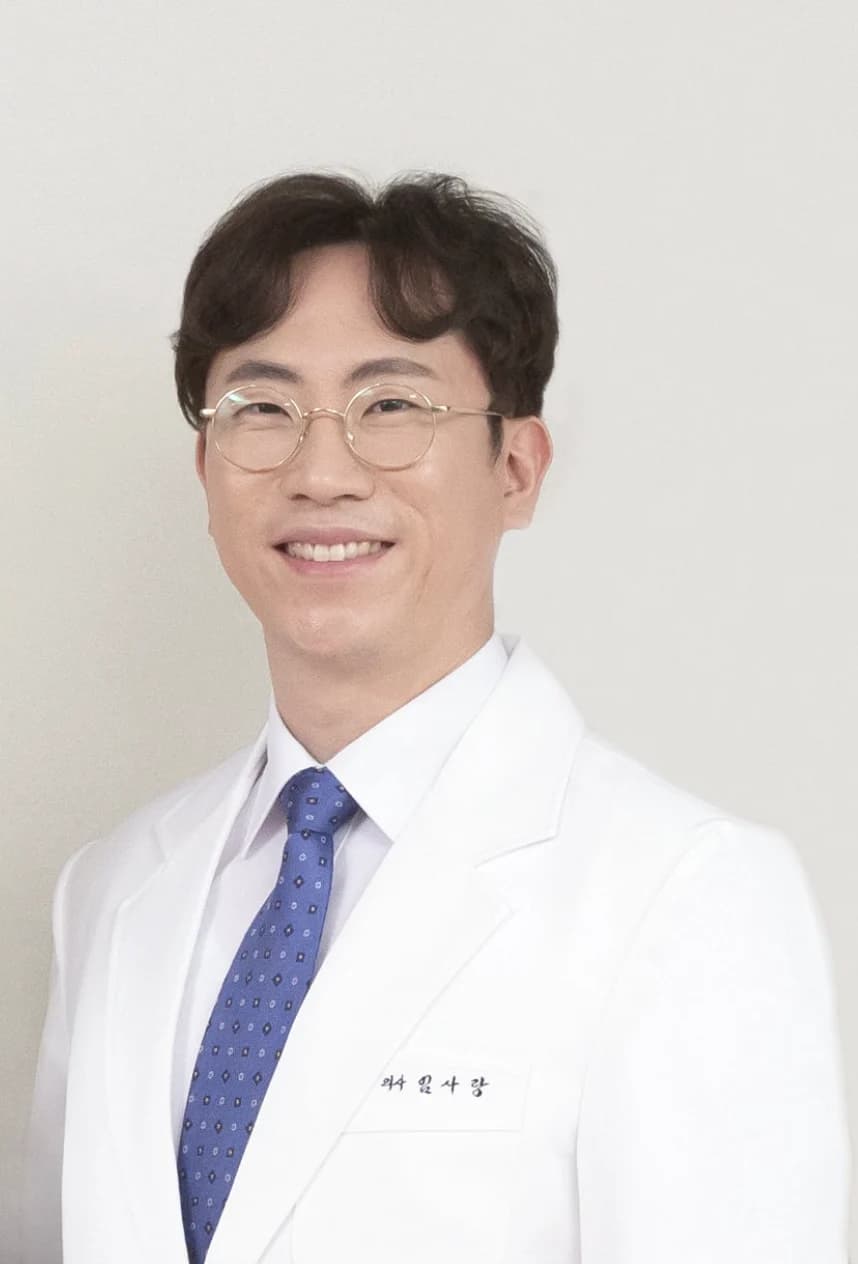 Dr. Sarang LimHead Doctor, Muse Clinic Myeongdong · 11 min readMedically reviewed by Sarang Lim, M.D., Head Doctor · Edited by: Sarang Lim, M.D.
Myeongdong Station, Exit 5 · English interpreters on site
Ask us on WhatsApp
In this article
Are the flat brown marks on your cheeks and the backs of your hands the simple sun spots that age spots removal on a Seoul trip can take care of, or is one of them worth a closer look before anyone points a laser at it?
Flat, evenly brown spots that have looked the same for years are usually solar lentigines, and they tend to respond well to targeted treatment. On the face the crust usually comes off in about a week; on the hands it often takes closer to two. A spot that is growing, changing colour or has a ragged edge is a different matter and needs a dermatologist's assessment first, and brown spread evenly over both cheeks may be melasma, which needs a much gentler plan.
Hello, I'm Sarang Lim, M.D., Head Doctor at Muse Clinic Myeongdong in Seoul.
Sorting those three apart is the conversation that comes before any treatment here. A structured consultation comes first, with a medical interpreter for your language at no extra charge who stays with you through the treatment, and then I plan and perform the treatment one-to-one. Foreign patients pay the same listed prices as Korean patients, the full price list is on our website, and we're open Saturday and Sunday from 9:00 AM to 3:00 PM, a one-minute walk from Myeongdong Station Exit 5.
If you'd like to start, send a daylight photo of the area on WhatsApp, taken by a window without makeup, plus one close-up of the spot that bothers you most. Add your Seoul dates and ask whether they leave enough time for the crusts to settle before your flight.
Which brown spots are actually age spots?
Age spots, which doctors call solar lentigines, are flat patches of extra pigment in skin that has had decades of sun. They usually sit on the face, the backs of the hands, the forearms and the upper chest, and range from a few millimetres to more than a centimetre across.
Several other things look similar in a bathroom mirror, and they don't all want the same treatment.
| What you notice | What it often is | What usually helps |
|---|---|---|
| Flat, even tan to brown, sharp edge, unchanged for years | Solar lentigo (age spot) | A targeted pigment laser or spot removal |
| Raised, waxy, stuck-on look, sometimes rough | Seborrhoeic keratosis | Removing the raised growth itself; toning does little |
| Matching patches on both cheeks, forehead or upper lip | Melasma | Low-energy toning over sessions and strict sun protection |
| Tiny dots over the nose that darken every summer | Freckles | A pigment laser, though they tend to return with sun |
| Growing, several colours, uneven edge, itching or bleeding | Needs checking for skin cancer | A dermatologist's exam, often a biopsy, before anything cosmetic |
The raised ones are worth singling out. DermNet describes seborrhoeic keratoses as very common harmless growths in older adults that look stuck on to the skin, and they often get booked as age spots. A toning laser aimed at flat pigment does little to a raised growth, so the method changes and so does the healing.
White spots under or around the eyes belong to another family again. They're usually milia or other tiny bumps with no pigment in them at all, so a pigment laser is the wrong tool and the question becomes how to open or flatten them.
When I'd tell you not to remove a spot this trip
Before you book anything, run every spot through the American Academy of Dermatology's ABCDE checklist: asymmetry, an irregular border, uneven colour, a diameter larger than a pencil eraser, and evolving, meaning any change in size, shape or colour.
A lentigo maligna, an early melanoma that grows slowly on sun-damaged skin, can look much like an ordinary age spot. Lasering it would take away the colour and leave the problem, along with the tissue a pathologist would need to read. A spot that trips any of those letters goes to a dermatologist first, and a biopsy is often the next step.
These are the other reasons I'd postpone or change the plan:
Risks and side effects to know
- A fresh tan, or a beach week straight after Seoul. Tanned skin darkens more easily after laser, and new crusts need shade.
- Isotretinoin taken for acne within roughly the past six months, since it can slow healing.
- Pregnancy or breastfeeding. Most cosmetic laser work waits.
- A history of keloids or raised scars.
- Cold sores, if spots near the lips are being treated; laser can set off a flare.
- Blood thinners. Don't stop them on your own; tell the doctor which ones you take.
- Melasma mixed in among the sun spots, which changes the energy and the order of treatment.
Say you're 61, flying in from Chicago with a week in Seoul, and you have six flat spots across your cheeks plus a darker one near your ear that your partner thinks has grown. If the six look like lentigines, I'd treat them and leave the one by the ear alone, with clear advice to have it checked and biopsied at home. You'd fly back with most of what you came for and nothing hidden under a scab.
The part of age spots removal I think about most is the spot I decide not to touch. Taking colour off skin is the easy half. Knowing which colour belongs to something that should be looked at under a microscope is the medical half, and I'd rather send you home with one spot untreated and a reason to see your dermatologist than with a clear cheek and an unanswered question.
How long does healing take, day by day?
For flat age spots treated with a pigment laser or a spot-removal method, the course below is typical. Your own skin sets the exact pace.
- Day 0 to 1: the spot turns darker, sometimes grey-brown, and the skin around it may be pink and warm. It looks worse before it looks better, which catches people off guard.
- Days 2 to 7: a thin crust or dark film forms. Leave it alone; picking is the most common reason a treated spot leaves a mark. A small hydrocolloid patch and sunscreen around it are enough.
- Days 7 to 10 on the face: the crust flakes off and leaves pink new skin.
- Hands, arms and chest: usually slower, often close to two weeks, because skin there has fewer of the hair follicles and oil glands that facial skin rebuilds from.
- Weeks 2 to 8: the pink fades. This is also when a temporary darkening can show up.
That last point deserves its own sentence. DermNet explains that post-inflammatory hyperpigmentation is more common in darker skin types and can take months to fade, and sun exposure keeps it going. It's the reason I'd ask about your plans for the two months after you leave, and not only the week you're here.
A raised mole heals on a different timeline from a flat spot, because tissue is removed rather than pigment broken up. If that's your real question, I've covered it separately in mole removal scars and how CO2 laser sites heal.
If the flight home is your main worry, send your departure date on WhatsApp with a photo of the backs of your hands, and ask whether the hand spots fit this trip or are better left for a later one.
Fitting treatment into a week in Seoul
A healing spot doesn't stop you flying. A crust under a patch is fine in a cabin, and there's no medical reason to stay until it falls off. What timing changes is how much sun your new skin meets in the first fortnight.
Book the consultation for your first or second day, so the treatment can go on whichever day suits the rest of your plans. If the trip ends with hiking, a beach or a long walking day outdoors, treating closer to departure means the fresh skin spends its first days indoors at home. Weekday hours run until 8:00 PM, which leaves room after a day out; on weekends we close at 3:00 PM.
Two things worth packing: a sunscreen stick you can reapply around a patch without peeling it off, and a hat with a real brim. And skip the jjimjilbang for the first few days. Long soaks in hot water and steam soften a crust before the skin underneath is ready.
If you're adding other laser work, tell the doctor everything you have in mind. People who book laser hair removal in Korea on the same trip sometimes forget that both treatments prefer untanned skin and shouldn't land on the same area within days of each other. And if the skin around your spots also has the coarse texture years of sun leave behind, that's a separate conversation, the one in getting rid of enlarged pores.
What sets the cost of age spots removal?
A figure here, without seeing your spots, would only be a guess. These are what move it:
- 01How many spots, and how large. Five small cheek spots and twenty across both hands are different treatments.
- 02The method. Spot-by-spot removal is priced differently from toning a whole area over several sessions.
- 03The area. Face, hands, forearms or chest.
- 04Sessions. Some darker or larger lentigines need a second pass once the first has healed, which matters if you'll only be in Seoul once.
- 05A biopsy for a doubtful spot. That's separate, and usually best done near home, where you'll get the result and any follow-up.
Foreign patients pay the same listed prices as Korean patients, and every option on our menu is published on the site with VAT shown separately. The factors look much like the ones behind acne scar treatment cost in Seoul, if you're weighing both. For your own figure, ask on WhatsApp with a photo and a rough count of the spots; the deposit and how you'll pay are settled after the consultation, so that question can go in the same message.
Pigment rebound, scars and spots that return
Redness and mild swelling for a day or two, a darker spot and then a crust for one to two weeks are expected and pass on their own.
Less often, a treated area turns darker a few weeks later, the post-inflammatory darkening described above, or turns lighter than the skin around it. Lighter spots can be slow to recover and occasionally stay. A small textured mark is possible, mostly when a crust is picked or a spot was treated deeply, and melasma hiding among the sun spots can flare after laser. Healing times and results vary from person to person, which is why the plan for each spot is confirmed at the consultation.
New age spots will also keep appearing wherever sun keeps landing; treatment clears what's there today. Daily broad-spectrum sunscreen of SPF 30 or more on the face and the backs of the hands is what slows the next ones.
After you're home, watch for two things. A treated spot that becomes more red, swollen, warm or weepy after the first couple of days points to infection and needs a doctor where you live within a day or two. A spot that darkens around week three is usually the temporary pigment: strict sunscreen, no picking, no scrubs, and a photo on WhatsApp if you want to ask what to do next.
If you've had a spot biopsied before, or a dermatologist wrote something down about one, a photo of that page is worth adding when you message.
What shapes your plan first
The first things that shape your plan are each spot's edge and colour pattern, how long it has been there and whether it has changed. After that I'd want to know how your skin has behaved after past cuts, burns or acne, because that history says more about the risk of darkening than skin colour alone.
Send one daylight photo without makeup on WhatsApp with your Seoul dates, and ask the question you actually have: which of these spots can go this trip. Your interpreter stays with you from the consultation through the treatment at no extra charge, and on the day I'll go through each spot with you and recommend what fits your skin and your flight home.
Questions people ask
Before you message us
Will age spots come back after treatment?
A treated lentigo usually stays lighter, though some fade only partly and need a second pass. New ones keep forming wherever sun keeps reaching your skin, which is why sunscreen of SPF 30 or more on your face and the backs of your hands matters as much as the treatment. Gloves while driving help with hand spots, since car side windows let some ultraviolet light through.
Does a spot need a biopsy before it's removed?
A flat spot that clearly looks like a lentigo and hasn't changed usually doesn't. A spot that is growing, has more than one colour or an uneven edge, itches or bleeds should be examined, and often biopsied, before anyone treats it cosmetically. In the UK the NHS generally removes moles and spots only for medical reasons, so if one worries you, start with your GP.
Is there an upper age limit for treating sun spots?
Not as such. What matters more than age is how your skin heals: thinner skin on older hands and arms often takes longer, and conditions like diabetes or medicines such as blood thinners change the plan. Bring a list of everything you take, including supplements like fish oil or ginkgo, which can make bruising more likely.
Can I fly home the day after treatment?
Yes. A small crust under a patch is no problem in an aircraft cabin. Cabin air is dry, so a thin layer of plain moisturiser around the patch helps, and keep the area out of direct window sunlight on long daytime flights. Let the crust fall off by itself at home, usually within one to two weeks.
When can I wear makeup over treated spots?
Over crusts or open skin, it's better not to. Once the crust has come off by itself and the pink skin underneath is closed, a mineral foundation or concealer is generally fine, with sunscreen going on first. Press it on gently with a soft sponge instead of rubbing, and take it off with a mild cleanser, not a scrub.
Results and maintenance period vary by individual. Every procedure carries the possibility of side effects, which are explained before you agree to treatment. Prices exclude 10% VAT and event prices may change. This article is general information from the clinic and is not a diagnosis; suitability is decided at the consultation.
Written by
Dr. Sarang Lim
Head Doctor · Muse Clinic Myeongdong
- Education & training
- Graduated, Inje University College of Medicine · Residency training, Paik Medical Center (Inje University) · Sungkyunkwan University Graduate School, Master's degree · Indiana University Kelley School of Business
- Advisory & certification
- Cynosure — Certified laser center · Juvéderm — Advisory doctor · QT Fill — Advisory doctor · Olidia — Advisory doctor · Galderma Sculptra — Advisory doctor · Merz — Advisory doctor · Jeisys — Advisory doctor · NOVA Thread — Advisory doctor
- Academic societies (full member)
- Korean Academy of Aesthetic Plastic & Laser Medicine · Korean Society of Aesthetic Surgery · Korean Society of Obesity Research Medicine · Korean Society of Obesity & Aesthetic Medicine · Korean Society of Anti-Aging Medicine