Pigmentation & Moles
How Do I Get Rid of Age Spots? Who Suits a Laser
How do I get rid of age spots? Flat, stable sun spots often fade with a pigment laser; changing spots get checked first. Dr. Sarang Lim explains who…
 Dr. Sarang LimHead Doctor, Muse Clinic Myeongdong · 11 min readMedically reviewed by Sarang Lim, M.D., Head Doctor · Edited by: Sarang Lim, M.D.
Myeongdong Station, Exit 5 · English interpreters on site
Ask us on WhatsApp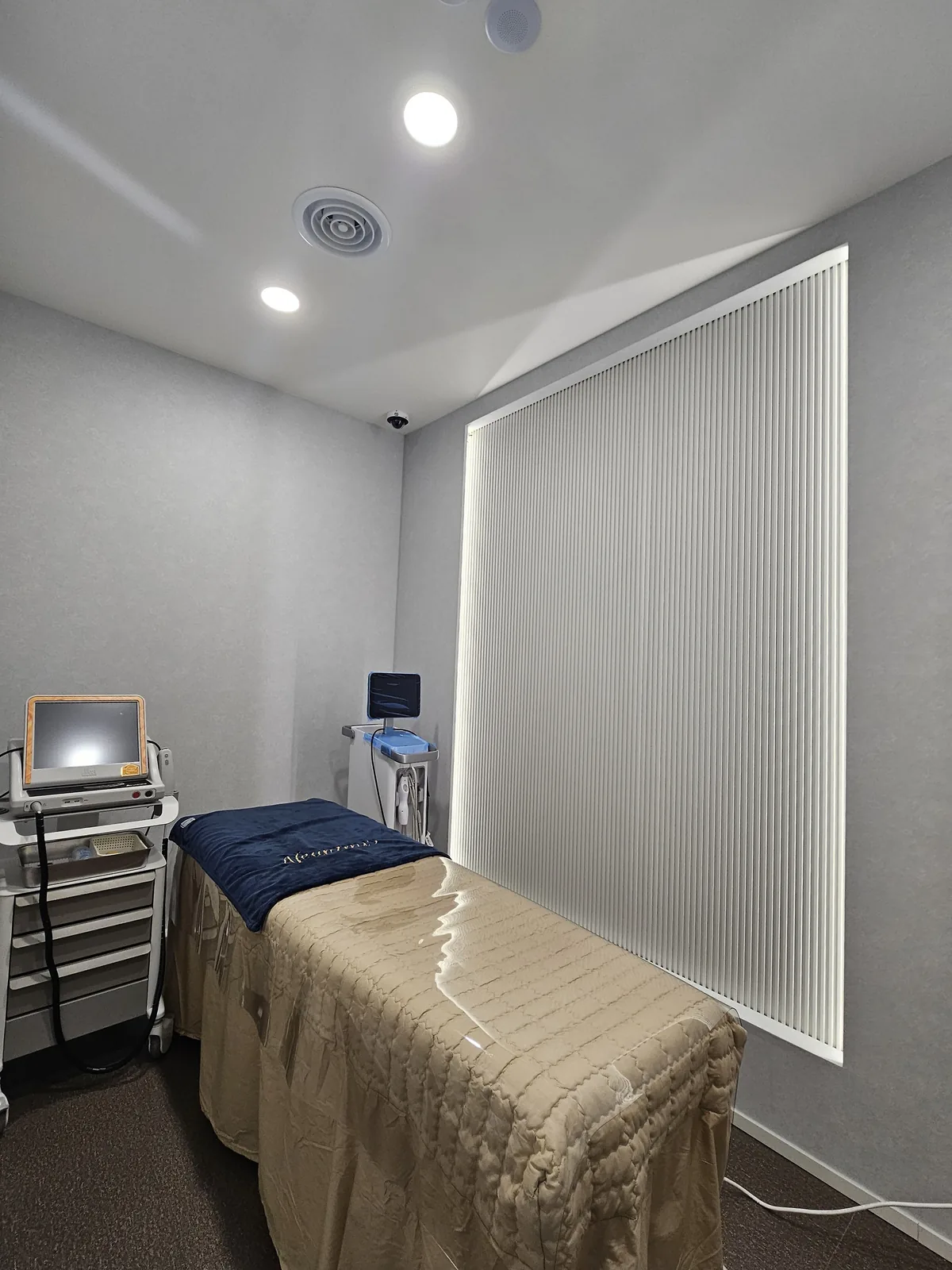
In this article
- 01What age spots are, and what gets mistaken for them
- 02How do I get rid of age spots at home first?
- 03Are you a good candidate for laser on age spots?
- 04When I'd tell you not to laser a spot
- 05Darkening, crusts and marks: what's normal after a pigment laser
- 06What decides the cost for your spots?
- 07Do age spots come back after laser?
- 08Planning your days in Seoul around a pigment laser
How do I get rid of age spots that a year of fade cream has barely touched, and is it safe to aim a laser at the darker one near my temple?
Flat, evenly brown spots on sun-exposed skin usually respond to a pigment laser much faster than to creams, and daily sunscreen is what stops new ones from forming. The darker spot comes first, though: anything that has changed in size, color or outline gets checked before anyone treats it.
Hello, I'm Dr. Sarang Lim, Head Doctor at Muse Clinic Myeongdong in Seoul.
Before anything touches your skin, a counselor goes over your skin history and sun exposure with you, and then I examine your spots in the treatment room and decide whether toning suits them. An English-speaking interpreter stays with you from that consultation through the treatment, at no extra charge, and you pay from the same published price list as Korean patients.
If you can't tell which of your spots are ordinary sun spots, send a daylight photo of them on WhatsApp, without makeup, and point out the one that has changed. You can ask that before booking anything.

What age spots are, and what gets mistaken for them
Age spots, also called sun spots or solar lentigines, are flat patches where pigment cells have made extra melanin after years of UV exposure. They're tan to dark brown, have a clear edge, and sit where the sun lands: cheekbones, temples, the backs of your hands, forearms and shoulders. They're harmless in themselves. The word age is really standing in for sun hours.
Three other things often get called age spots, and each is handled differently:
Risks and side effects to know
- Melasma. Blotchy, fairly symmetric patches on the cheeks, upper lip or forehead, driven by hormones and heat as well as sun. The American Academy of Dermatology notes that melasma often returns, and that procedures such as lasers need careful selection because the wrong one can make it darker.
- Seborrheic keratoses. Raised, waxy, stuck-on brown growths that become common after 40. A toning laser won't flatten them; they're a removal question.
- Dark marks left by a pimple, a scratch or a burn. This is post-inflammatory hyperpigmentation, which fades on its own over months and can deepen if the skin gets more heat or irritation.
Small white bumps under the eyes are something else again. Those are milia, a keratin cyst rather than pigment, and I've covered them in how to get rid of milia under the eyes.
How do I get rid of age spots at home first?
Start with sunscreen, because nothing else holds without it. A broad-spectrum SPF 30 or higher every morning, reapplied when you're outdoors, plus a wide-brimmed hat, slows new spots and keeps the existing ones from darkening. It's unglamorous, and over the years it does most of the work.
Fade creams come next. Over-the-counter products with vitamin C, niacinamide, azelaic acid or a retinoid can lighten pigment slowly over two to three months of daily use. They tend to soften a spot, and a sharp-edged dark spot on the back of the hand usually barely moves. If you've used one faithfully for three months and the edges look as crisp as when you started, a fourth month of the same cream is unlikely to change much.
Two habits I'd drop: scrubbing at spots, and kitchen remedies like lemon juice. Both irritate the skin, and irritated skin can lay down more pigment, which is the opposite of what you're after.
One small thing that pays off later: photograph your spots now, in daylight by a window, and again a week before you travel. If a spot looks different between the two photos, you've learned something important before anyone treats it.
Are you a good candidate for laser on age spots?
A pigment laser works by aiming light at melanin. Our Pico Laser Toning uses picosecond wavelengths that pass through the skin and target melanin selectively, with very short pulses that limit damage to the surrounding area. That selectivity is exactly why the diagnosis matters: the laser responds to pigment, whatever put it there.

You're usually a good fit when:
- the spots are flat, evenly colored and have looked the same for years
- they sit on sun-exposed skin and you can say roughly when they appeared
- your skin isn't tanned right now
- you'll wear sunscreen every day for the months afterwards
The pigment menu here includes Pico Laser Toning, laser toning and the Cynergy Genesis laser. Which one suits your spots, and how it's set up, is what I decide after examining them. A raised growth is a different conversation, and mole removal is a separate item on the menu.
If what bothers you in the mirror is texture as much as color, toning isn't the main tool for that; I've written separately about what helps enlarged pores.
When I'd tell you not to laser a spot
In short, this is the section most pages leave out, and for someone over 40 it's the one that matters most.
A spot that's changing. The American Academy of Dermatology's ABCDE guide lists asymmetry, an irregular border, uneven color, a diameter larger than about 6 mm (a pencil eraser), and evolving, meaning any change in size, shape or color. A spot with any of these needs a dermatologist's assessment and possibly a biopsy. Lasering it removes the very pigment a pathologist would need to look at, so I'd rather you leave Seoul with that spot untouched and a plan to have it checked at home.
It's melasma, or melasma mixed in with sun spots. Stronger heat on melasma can trigger rebound darkening. Toning for melasma is usually a slow series of sessions weeks apart, which rarely fits a short trip.
You're freshly tanned, or flying on to a beach. Tanned skin carries more melanin everywhere, so the laser has a harder time telling the spot from the skin around it, and the risk of patchy marks goes up. Let a tan fade for several weeks first, and keep treated skin out of strong sun afterwards.
Your skin marks easily. If a pimple or a scratch leaves a brown mark that takes months to clear, your skin is prone to post-inflammatory hyperpigmentation, which DermNet describes as more common and longer-lasting in darker skin types. That's a reason for a more conservative plan, and sometimes for waiting.
Medical reasons to pause. Isotretinoin in recent months, pregnancy or breastfeeding, an active infection or cold sore near the area, a recent peel or laser elsewhere, or medicines that make you sun-sensitive. Mention all of these at the consultation.
Say you're 58, with a dozen flat brown spots across your cheekbones and the backs of your hands, a faint shadow on your upper lip that darkens every summer, and one spot by your ear that you think has grown since spring. I'd separate those three. The cheek and hand spots are the part a pigment laser is built for. The upper lip sounds like melasma and gets a gentler plan, or none on a short trip. The spot by your ear I wouldn't treat at all until a dermatologist has seen it, and I'd tell you that plainly rather than laser around it.
Before any pigment laser, the question I put to myself is: if I'm wrong about what this spot is, what have we lost? For a sun spot, very little. For a spot that needed a biopsy, a great deal. So the spot you're least sure about is the one I'd want to look at first, and sometimes the one I leave alone.
If one of your spots matches anything on that list, send a close-up of it on WhatsApp beside a coin for scale, with a line on how long it's been there and whether it has changed.
Darkening, crusts and marks: what's normal after a pigment laser
A treated sun spot commonly turns darker for a few days, and may form a fine, coffee-ground crust that flakes off within about a week to ten days. Leave it alone; picking it is the most common way to end up with a mark. Redness around the spot usually settles within hours to a day or two. Toning sessions tend to leave milder redness and less to see.
Less common is post-inflammatory hyperpigmentation: a brown shadow where the spot was, appearing a few weeks later. It's more likely after sun exposure on treated skin or in skin that marks easily, and it usually fades over months with strict sunscreen. Lighter patches, blistering or a burn are uncommon. Spots on the same face can fade at different speeds, and results vary with skin type, how deep the pigment sits and how closely you avoid sun.
Once you're home, keep the area moisturized, keep SPF on it daily, and skip saunas and hot yoga for a couple of days. If a spot blisters, oozes, or looks infected, see a doctor at home promptly. Before you leave Seoul, write down the name of the treatment and the date, and take a photo of each treated area; a dermatologist at home can do far more with those than with a description.
What decides the cost for your spots?
The figure for your case is set by a handful of things:
- how many spots, and where: a few on the cheeks is a different plan from cheeks plus both hands
- which laser fits your spots, and whether it's a single treatment or a toning series
- how many sessions are realistic within your days in Seoul
- whether a raised growth needs mole removal on top of the laser
Every item on the menu has its price published on the site, and foreign patients use the same price list as Korean patients. When you're ready to book, send a photo of the areas you'd like treated on WhatsApp and ask what it would cost for your case; you can ask about the deposit and how to pay in the same message, since both are settled after the consultation.
Do age spots come back after laser?
A spot that has cleared tends to stay lighter, but the sun-damaged skin around it keeps the ability to make new ones. Over the years many people find a few new spots appear, especially on the hands and cheekbones, and treat them as they come. How long you stay clear has more to do with your sunscreen than with the laser. Melasma behaves differently and often returns, which is one more reason to tell the two apart before treatment.
Spots are often the first sign of sun damage people notice, and loosening skin tends to follow. That's a separate question from pigment, and if it's on your mind I've written about who Duet Thermage suits and about what helps hooded eyes.
If you're planning around a trip, send your Seoul dates on WhatsApp together with a photo of each area, and ask how many sessions realistically fit in those days.
Planning your days in Seoul around a pigment laser
The clinic is on the 3rd floor of Korea Daeyungak Tower, 97 Toegye-ro, a 1-minute walk from Myeongdong Station Exit 5 on Line 4. Hours are Monday to Friday 10:00 AM to 8:00 PM and Saturday and Sunday 9:00 AM to 3:00 PM, so a long weekend works.
A few things make the trip go better. Arrive without a fresh tan. Many dermatologists suggest pausing retinoids and strong acids for several days before laser; ask at booking which of your products to stop. Book the treatment early in your stay, so the darkening and crusting begin while you're still in Seoul. Pack a wide-brimmed hat and a mineral sunscreen, and keep the jjimjilbang for another trip.
The easiest first step is one daylight photo of your spots on WhatsApp with your travel dates, and the question that's really on your mind, such as whether the darker spot should be treated at all. When you come, the first thing I look at is that spot, and we go through the rest of the plan together at the consultation.
Questions people ask
Before you message us
Can I get age spots lasered on a short trip to Seoul?
Often, yes, if the spots are flat, stable sun spots and your skin isn't tanned. What usually doesn't fit a short trip is melasma, which tends to need a slow series of sessions weeks apart. Booking early in your stay means the darkening and crusting begin while you're still in Seoul, and you fly home with only small dark flecks that flake off over the following days.
Does laser for age spots hurt?
Most people describe it as a quick snapping or flicking sensation, a bit like a rubber band, lasting a second per pulse. Warmth and mild stinging can linger for an hour or so. Clinics often use numbing cream for pigment laser, so ask at booking whether it will be used for your areas, especially for the backs of the hands, where the skin is thinner.
Will treated age spots be visible on the flight home?
Usually, yes, for about a week. Treated spots typically look darker than before and may carry a fine crust, which looks like small coffee-colored flecks. Flying doesn't affect healing. Keep the area moisturized, avoid rubbing it with a face mask or towel, and wait until the crust has come off on its own before wearing heavy makeup over it.
Are age spots on the hands harder to treat than on the face?
They often take longer. Skin on the back of the hand is thinner, heals more slowly and gets daily sun through car windows and while driving, so spots there can need more sessions and fade more gradually. Many people forget sunscreen on their hands, which is the main reason spots return there. A hand cream with SPF is an easy habit to start.
What if a treated spot gets darker weeks after I'm home?
A brown shadow appearing two to four weeks later is usually post-inflammatory hyperpigmentation, especially if the area caught sun. It generally fades over months with strict daily sunscreen and no picking or scrubbing. If the area is raised, painful, blistered or keeps changing, see a dermatologist at home and bring your treatment name, date and photos.
Results and maintenance period vary by individual. Every procedure carries the possibility of side effects, which are explained before you agree to treatment. Prices exclude 10% VAT and event prices may change. This article is general information from the clinic and is not a diagnosis; suitability is decided at the consultation.
Written by
Dr. Sarang Lim
Head Doctor · Muse Clinic Myeongdong
- Education & training
- Graduated, Inje University College of Medicine · Residency training, Paik Medical Center (Inje University) · Sungkyunkwan University Graduate School, Master's degree · Indiana University Kelley School of Business
- Advisory & certification
- Cynosure — Certified laser center · Juvéderm — Advisory doctor · QT Fill — Advisory doctor · Olidia — Advisory doctor · Galderma Sculptra — Advisory doctor · Merz — Advisory doctor · Jeisys — Advisory doctor · NOVA Thread — Advisory doctor
- Academic societies (full member)
- Korean Academy of Aesthetic Plastic & Laser Medicine · Korean Society of Aesthetic Surgery · Korean Society of Obesity Research Medicine · Korean Society of Obesity & Aesthetic Medicine · Korean Society of Anti-Aging Medicine