Pigmentation & Moles
How Safe Is Pico Laser Tattoo Removal? Scar Risk
How safe is pico laser tattoo removal? Usually safe on untanned skin; the scar, pigment and ink risks, who should wait, and how to plan sessions in Seoul.
 Dr. Sarang LimHead Doctor, Muse Clinic Myeongdong · Updated · 10 min readMedically reviewed by Sarang Lim, M.D., Head Doctor · Edited by: Sarang Lim, M.D.
Myeongdong Station, Exit 5 · English interpreters on site
Ask us on WhatsApp
In this article
Afraid a laser will leave a scar, a pale square or a grey shadow where your tattoo used to be, and that you'll already be home when it shows?
How safe is pico laser tattoo removal, then? On healthy, untanned skin it is generally safe: most people get redness, swelling and blisters that settle within one to two weeks, and scarring is uncommon. The risk climbs with a recent tan, certain ink colors, a keloid history and sessions squeezed too close together.
Hello, I'm Dr. Sarang Lim, Head Doctor at Muse Clinic Myeongdong.
Tattoo removal is on our menu, and I'm a member of the Korean Academy of Aesthetic Plastic & Laser Medicine. After you talk with a counselor, I'm the one who consults and treats you, and an English interpreter stays with you from the consultation through the treatment at no extra charge, so questions about your ink, your skin and any earlier laser get asked in plain English.
If you're not sure your tattoo is a good fit, send one daylight photo of it on WhatsApp with the ink colors and roughly how old it is, and ask the one thing that worries you most.
Why a picosecond laser puts less heat into your skin
A tattoo is ink sitting in the dermis as particles too large for your immune cells to carry away. The laser's job is to break them small enough to be cleared. A picosecond laser fires pulses lasting trillionths of a second, roughly a thousand times shorter than older nanosecond lasers. At that speed the particle shatters from pressure before much heat spreads into the skin around it.
Scar and risk: what to watch for
Think of breaking a sugar cube with one sharp tap instead of melting it on a stove. You end up with fine grains, and the counter never gets hot. Less heat in the surrounding tissue is the main reason picosecond lasers are considered lower in burn and scar risk at sensible settings.
Lower is still above zero. Energy set too high for the skin type, or pulses stacked on one spot, can blister deeply and scar with any laser. And the fragments are cleared by your body over the following weeks, so the fading happens between sessions, not on the treatment bed. Reviews suggest picosecond lasers may need fewer sessions for some black and blue inks, but almost no professional tattoo disappears in one visit.
Blisters, pale patches, scars and ink that turns darker
Right after each pulse the skin usually turns white for a few minutes. This frosting is gas released from the ink and fades on its own. Over the next days, expect some of these:
- Redness, swelling and pinpoint bleeding in the first day or two.
- Blisters, usually within the first three days, healing over one to two weeks.
- A thin crust that should fall off by itself, and itching as the skin closes.
The less common reactions are the ones most people actually fear:
- Lighter or darker patches. The laser can disturb your own pigment as well as the ink. Lighter patches (hypopigmentation) and darker ones (hyperpigmentation) are more likely on tanned or deeper skin tones. Many fade over months; some last much longer.
- Texture change or scarring. Uncommon at appropriate energy. The odds rise with infection, picked blisters, a keloid history, or a new session on skin that hasn't healed.
- Ink that darkens instead of fading. White, flesh-tone, pink and some red inks, common in cosmetic eyebrow and lip tattoos, can contain iron oxide or titanium dioxide. A laser can turn these grey or black on the first pass. A small test spot first is the usual precaution.
- Allergic reactions. Rare, and mostly linked to red ink, when broken-down particles trigger a reaction in the skin or, very rarely, the body.
Some colors also resist. Green, light blue and yellow tend to need more sessions, and a faint shadow can remain even after many. Results vary from person to person, so plan for fading first and full clearing as a possibility.
If something looks wrong once you're home, the signs that need a doctor that day are spreading redness, pus, heat, fever, or pain that gets worse after the third day instead of better. Before leaving Seoul, ask for the laser type and settings in writing so a doctor at home knows what was used.
Who should wait, and when I wouldn't start
How safe is pico laser tattoo removal on your skin in particular? That turns more on your situation than on the machine. These are the conditions where I would delay, or not start on this trip:
Infection and scars: what to watch for
- A tan or sunburn in the past few weeks, including a beach stop on the way to Seoul.
- Isotretinoin taken in roughly the last six months. The evidence is mixed, and many doctors still prefer to wait.
- Pregnancy or breastfeeding. There's little data, so elective laser work is usually postponed.
- Active infection, an eczema flare or a cold sore in or near the area.
- A history of keloids or thick, raised scars.
- A mole or a changing spot inside the tattoo. It should be examined before any laser goes over it; our page on how moles are removed and how those scars heal covers what that check involves.
- A tattoo that hasn't fully healed from being done.
The first session is rarely the one that worries me. The one I worry about is squeezed in too early: a third treatment booked four weeks after the second because a flight happened to fit, on skin that hasn't settled. I put genuine product and the correct dose first with injections, and I apply the same thinking to lasers: the right energy for your skin on the day, even if the ink fades more slowly.
Say you're 29, flying to Seoul from Sydney via a week in Bali, with a black-and-red script on your inner wrist and a pale strip left by an earlier laser at home. I would not begin on fresh Bali sun. I'd want the pale strip seen in daylight, the red ink tested on a small spot, and the first full session moved to a later trip once the tan has gone. On this trip, the consultation and a clear plan for the gap are a sensible start.
When you message, add two details: the last time you were in strong sun, and any medicines you take. Then ask whether the dates you have leave the skin enough time to settle before your flight.
How many sessions, and how far apart?
Most tattoos need several sessions, often spaced six weeks or more apart, and many professional tattoos need well beyond a handful. The gap is a safety margin as well as a fading window: the skin must heal fully, and your immune system needs time to clear the last round of fragments.
What moves the count is fairly predictable. Black clears most readily; mixed colors take longer. Dense professional work sits deeper than an amateur tattoo. Older tattoos have often faded somewhat already. Ankles, feet and fingers tend to clear more slowly than the upper arm or back. And deeper skin tones limit how much energy is sensible, which can add sessions.
For someone flying in, the practical rule is one session per trip. Two sessions a few days apart doesn't speed anything up. It only treats skin that is still injured.
What moves the cost of your plan
The cost follows the same factors: the size of the tattoo, how many colors need different wavelengths, how many sessions you're likely to need, and how many trips that takes. Our full price list is published on the tattoo removal treatment page, foreign patients pay the same prices as Korean patients, and VAT is added on top. Deposit and payment method are settled after the consultation. For your own figure, send a photo with a coin beside the tattoo for scale on WhatsApp and ask what one session and the likely series would come to.
Your first session on a Seoul trip
Put the consultation and session early in your stay, never on the last day. Blisters usually appear within the first three days, and it's easier to manage them from your hotel than from a plane seat.
For the days after, keep the area clean and covered, leave blisters intact, and skip swimming pools, saunas and the jjimjilbang until the skin has closed. Keep the spot out of the sun; a long sleeve is easier than sunscreen on broken skin. Flying is generally fine, but pack spare dressings and change them when you land.
If you're planning other laser work on the same trip, our guide to choosing a laser treatment in Seoul is worth reading first, since skin next to a healing tattoo shouldn't be treated. If you also want laser hair removal on the same arm or leg, leave that area alone until the tattoo site has fully healed.

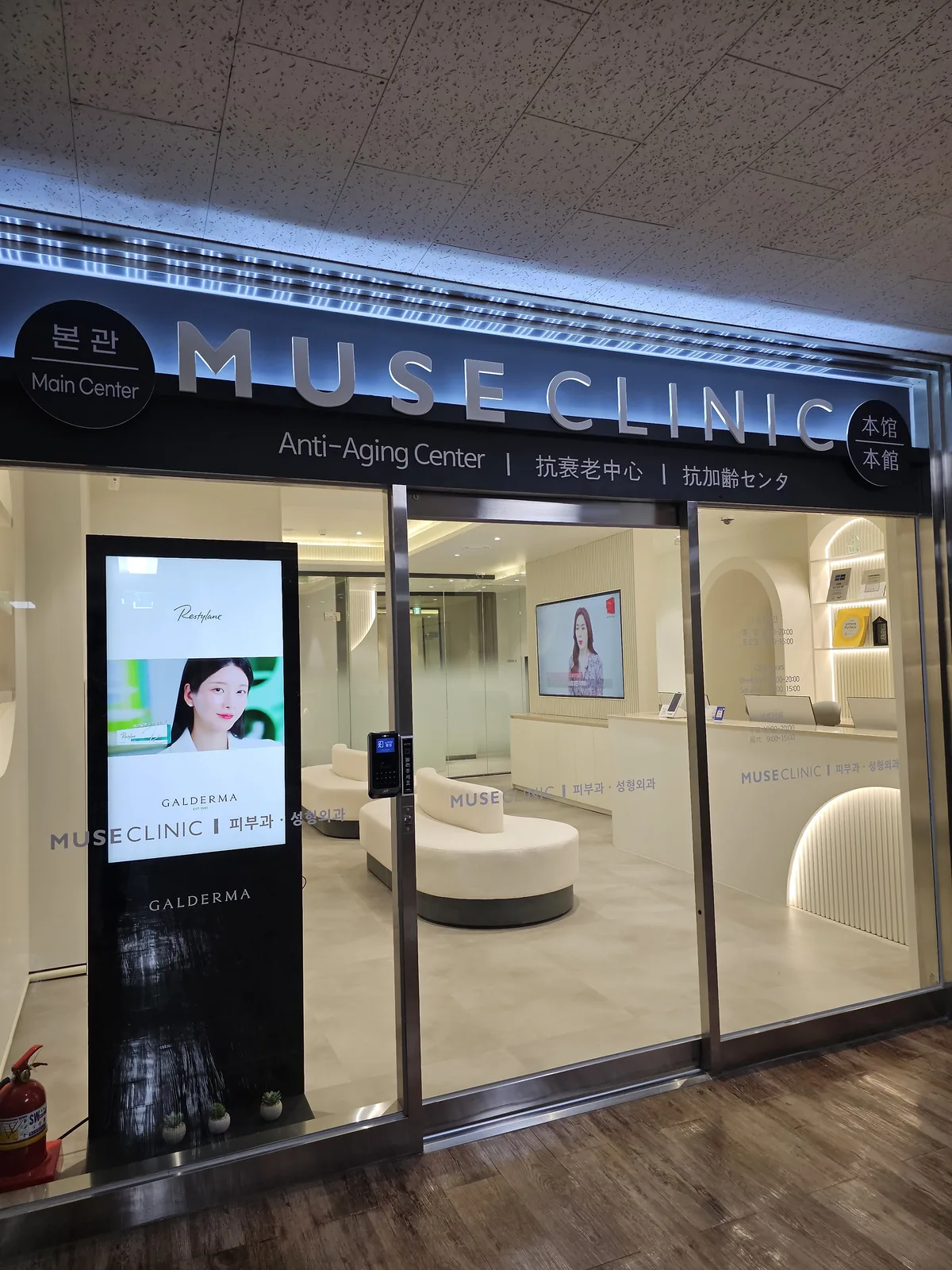
We're one minute from Myeongdong Station Exit 5, on the 3rd floor of Korea Daeyungak Tower, 97 Toegye-ro. Hours are 10:00 AM to 8:00 PM on weekdays and 9:00 AM to 3:00 PM on Saturday and Sunday, so a session can sit on a weekend morning of a short trip.
If you're torn between this trip and the next, message your arrival and departure dates on WhatsApp and ask which day would leave the most healing time before you fly.
What to check before anyone lasers your tattoo
- Which wavelength will be used for each of your colors, and whether a test spot is planned for white, pink or cosmetic inks.
- Who examines your skin, and who operates the laser.
- How far apart sessions will be, and what happens if your skin hasn't healed by the next date.
- Aftercare instructions you can follow at home, and what to show a doctor there if something goes wrong.
- Whether the price list is published, and whether foreigners pay the same price.
It doesn't have to be us. Wherever you go, the person treating you should be able to answer each of these before the first pulse.
Where I stand: a picosecond laser is a reasonable tool for most tattoos on healthy skin, and the risk sits mainly in timing, tanned skin and impatience. I'd rather see a tattoo fade across a year of spaced trips than push it in a month and leave a mark you didn't have before. The exact settings and number of sessions are confirmed at the consultation, and there's no deadline here; the ink has waited this long.
Start with one daylight photo of the tattoo on WhatsApp, plus its colors and roughly when it was done, and ask the question that's actually holding you back: whether your skin is ready this trip. What decides your first setting is the mix of colors, your skin tone, and how the skin around any earlier laser mark looks.
— Sarang Lim, M.D., Head Doctor
Questions people ask
Before you message us
Does pico laser tattoo removal hurt?
Most people describe each pulse as a rubber band snapping against the skin, sharper over bone such as the ankle or wrist. A topical numbing cream is commonly used beforehand, and you can ask about it when you book. Afterwards the area usually feels like a sunburn for a day or two, then itchy as blisters heal.
Can I fly the day after a session?
Generally yes. Cabin air won't harm the treated skin, but keep it covered, leave any blisters intact, and pack spare dressings to change on arrival. Wear loose sleeves so nothing rubs. If the area swells a lot, keeping it raised during the flight helps.
Is it safe to laser an eyebrow or lip liner tattoo?
It carries a specific risk. Cosmetic inks often include white, flesh or pink pigments with iron oxide or titanium dioxide, which can turn grey or black when first hit by a laser. A small test spot, checked weeks later, is the usual precaution, and the eyes need proper shielding when working near the brows.
I have darker skin. Is my risk higher?
The main added risk is pigment change: lighter or darker patches around the tattoo are more likely on deeper skin tones. Longer wavelengths, lower energy and wider spacing between sessions are the usual adjustments, which can mean more sessions overall.
Can a tattoo that was partly removed elsewhere be treated?
Usually, as long as the skin has fully healed and there's no active scarring. Bring the dates of earlier sessions and, if you have it, the laser type used. Pale or raised areas from previous treatment change how much energy is sensible, so those spots are often treated more cautiously.
Results and maintenance period vary by individual. Every procedure carries the possibility of side effects, which are explained before you agree to treatment. Prices exclude 10% VAT and event prices may change. This article is general information from the clinic and is not a diagnosis; suitability is decided at the consultation.
Written by
Dr. Sarang Lim
Head Doctor · Muse Clinic Myeongdong
- Education & training
- Graduated, Inje University College of Medicine · Residency training, Paik Medical Center (Inje University) · Sungkyunkwan University Graduate School, Master's degree · Indiana University Kelley School of Business
- Advisory & certification
- Cynosure — Certified laser center · Juvéderm — Advisory doctor · QT Fill — Advisory doctor · Olidia — Advisory doctor · Galderma Sculptra — Advisory doctor · Merz — Advisory doctor · Jeisys — Advisory doctor · NOVA Thread — Advisory doctor
- Academic societies (full member)
- Korean Academy of Aesthetic Plastic & Laser Medicine · Korean Society of Aesthetic Surgery · Korean Society of Obesity Research Medicine · Korean Society of Obesity & Aesthetic Medicine · Korean Society of Anti-Aging Medicine
Treatments in this article
Excl. 10% VAT · same list Korean patients pay